Followers

23 November 2006

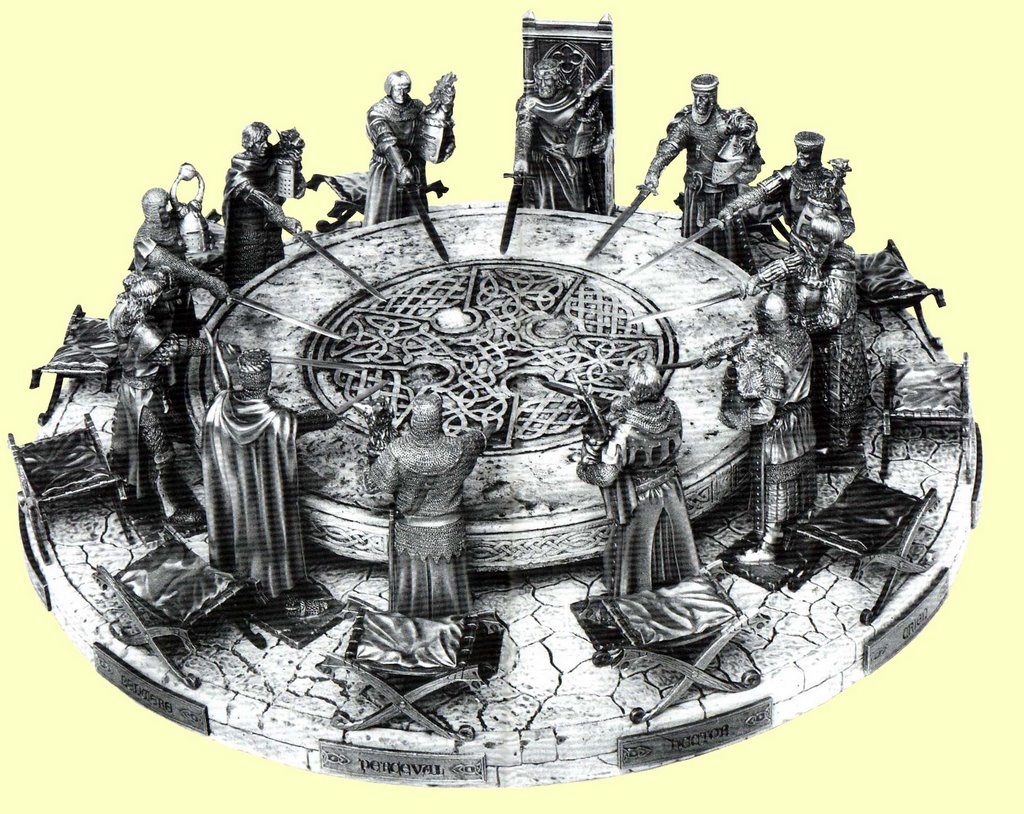
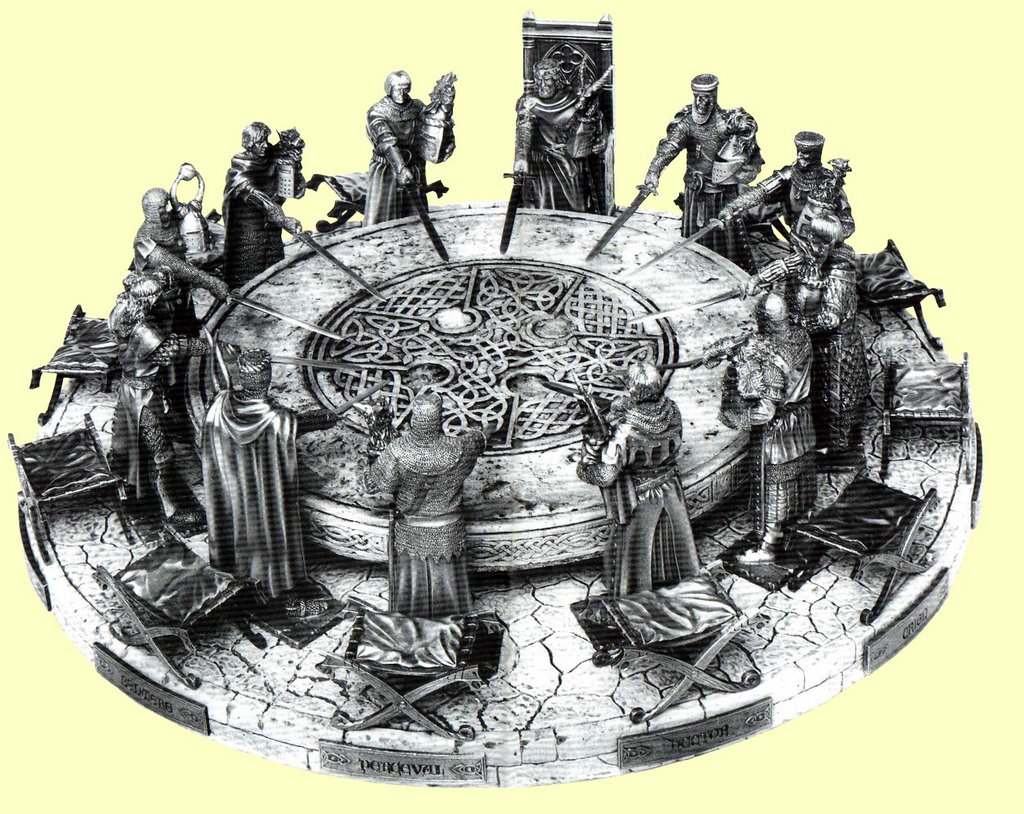
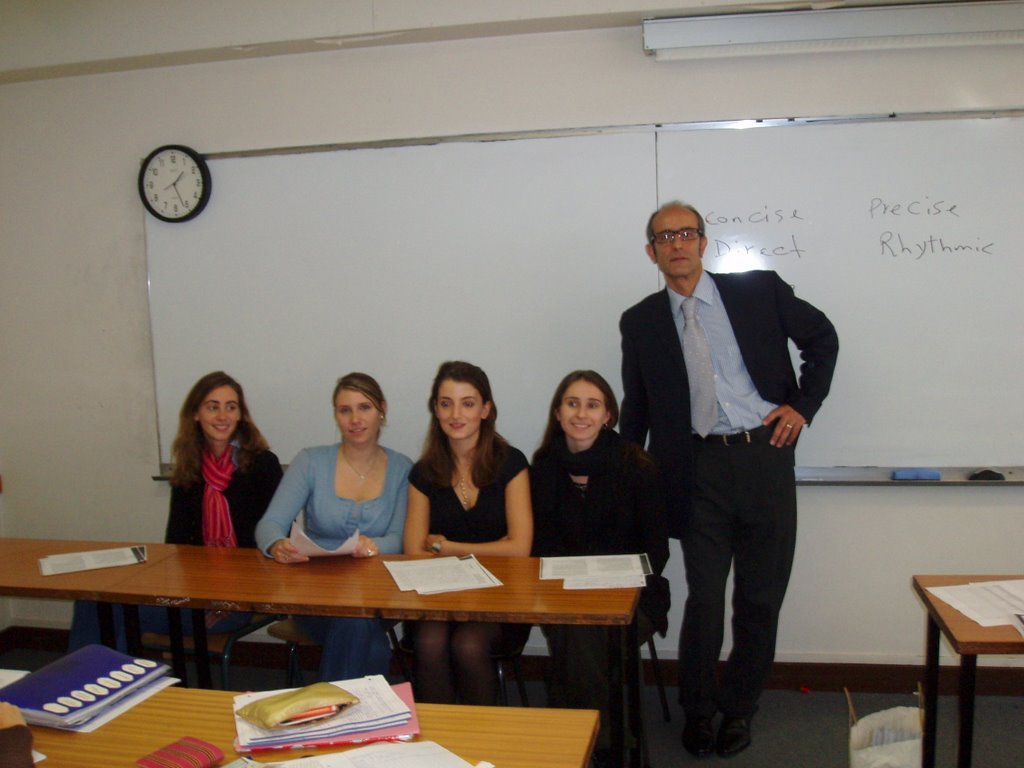
Alafaco First Year Round Table

Thank you very much. An excellent round table, comprehensive and well thought through. You deserve 8 out of 10.

Alafaco Second Year Round Table

This is what is called creative reading. Congratulations. You deserve 8 out of 10.

Paul Laurence Dunbar (1872-1906), Sympathy

I KNOW what the caged bird feels, alas!
When the sun is bright on the upland slopes;
When the wind stirs soft through the springing grass,
And the river flows like a stream of glass;
When the first bird sings and the first bud opes,
And the faint perfume from its chalice steals —
I know what the caged bird feels!

I know why the caged bird beats his wing
Till its blood is red on the cruel bars;
For he must fly back to his perch and cling
When he fain would be on the bough a-swing;
And a pain still throbs in the old, old scars
And they pulse again with a keener sting —
I know why he beats his wing!

I know why the caged bird sings, ah me,
When his wing is bruised and his bosom sore,—
When he beats his bars and he would be free;
It is not a carol of joy or glee,
But a prayer that he sends from his heart's deep core,
But a plea, that upward to Heaven he flings —
I know why the caged bird sings!

Life's Tragedy by Paul Laurence Dunbar

It may be misery not to sing at all,
And to go silent through the brimming day;
It may be misery never to be loved,
But deeper griefs than these beset the way.

To sing the perfect song,
And by a half-tone lost the key,
There the potent sorrow, there the grief,
The pale, sad staring of Life's Tragedy.

To have come near to the perfect love,
Not the hot passion of untempered youth,
But that which lies aside its vanity,
And gives, for thy trusting worship, truth.

This, this indeed is to be accursed,
For if we mortals love, or if we sing,
We count our joys not by what we have,
But by what kept us from that perfect thing.

22 November 2006

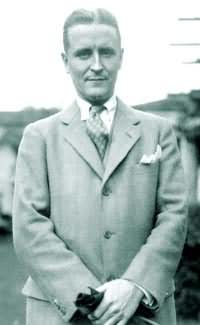
F. Scott Fitzgerald, 1896 - 1940


Either you think, or else others have to think for you and take power from you, pervert and discipline your natural tastes, civilize and sterilize you.

First you take a drink, then the drink takes a drink, then the drink takes you.

Genius is the ability to put into effect what is on your mind.

In a real dark night of the soul, it is always three o'clock in the morning, day after day.

It is in the thirties that we want friends. In the forties we know they won't save us any more than love did.

It takes a genius to whine appealingly.

Never confuse a single defeat with a final defeat.

No such thing as a man willing to be honest - that would be like a blind man willing to see.

Show me a hero and I'll write you a tragedy.

The rhythm of the weekend, with its birth, its planned gaieties, and its announced end, followed the rhythm of life and was a substitute for it.

The test of a first rate intelligence is the ability to hold two opposed ideas in the mind at the same time, and still retain the ability to function.

The victor belongs to the spoils.

The world, as a rule, does not live on beaches and in country clubs.

Vitality shows in not only the ability to persist but the ability to start over.

You don't write because you want to say something, you write because you have something to say.

All good writing is swimming under water and holding your breath.

That was always my experience-- a poor boy in a rich town; a poor boy in a rich boy's school; a poor boy in a rich man's club at Princeton ... . However, I have never been able to forgive the rich for being rich, and it has colored my entire life and works.

Paul Laurence Dunbar, 1872 - 1906

His poetry reflects Black American life and dialect.


Paul Laurence Dunbar was the first African-American to gain national eminence as a poet. Born in 1872 in Dayton, Ohio, he was the son of ex-slaves and classmate to Orville Wright of aviation fame.
Although he lived to be only 33 years old, Dunbar was prolific, writing short stories, novels, librettos, plays, songs and essays as well as the poetry for which he became well known. He was popular with black and white readers of his day, and his works are celebrated today by scholars and school children alike.
His style encompasses two distinct voices -- the standard English of the classical poet and the evocative dialect of the turn-of-the-century black community in America. He was gifted in poetry -- the way that Mark Twain was in prose -- in using dialect to convey character.

Information cited from:

http://www.plethoreum.org/dunbar/

21 November 2006

J(erome) D(avid) Salinger, 1919 - 2010

A Perfect Day for Bananafish

The New Yorker, January 31, 1948

To read this short story please go to the following link:

http://www.freeweb.hu/tchl/salinger/perfectday.html

17 November 2006

Alafaco Round Table Second Year

An excellent quality of research, coordination and presentation. This round table deserves a high score: eight out of ten.


Alafaco Round Table First Year


An Excellent round table. Observing many excellent rules of communication including eye contact with the audience, grasp of the material, fine delivery and first rate arguments. I give it eight out of ten.

16 November 2006

Alafaco's Thought of the Day


Thought


By D. H. Lawrence


Thought, I love thought.
But not the juggling and twisting of already existent ideas
I despise that self-important game.
Thought is the welling up of unknown life into consciousness,
Thought is the testing of statements on the touchstone of consciousness,
Thought is gazing onto the face of life, and reading what can be read,
Thought is pondering over experience, and coming to conclusion.
Thought is not a trick, or an exercise, or a set of dodges,
Thought is a man in his wholeness, wholly attending.

15 November 2006

I Hear America Singing


I hear America singing, the varied carols I hear;
Those of mechanics—each one singing his, as it should be, blithe and strong;
The carpenter singing his, as he measures his plank or beam,
The mason singing his, as he makes ready for work, or leaves off work;
The boatman singing what belongs to him in his boat—the deckhand singing on the steamboat deck;
The shoemaker singing as he sits on his bench—the hatter singing as he stands;
The wood-cutter’s song—the ploughboy’s, on his way in the morning, or at the noon intermission, or at sundown;
The delicious singing of the mother—or of the young wife at work—or of the girl sewing or washing—Each singing what belongs to her, and to none else;
The day what belongs to the day—At night, the party of young fellows, robust, friendly,
Singing, with open mouths, their strong melodious songs.

O Captain! My Captain! Walt Whitman. 1819–1892


O CAPTAIN! my Captain! our fearful trip is done,
The ship has weather'd every rack, the prize we sought is won,
The port is near, the bells I hear, the people all exulting,
While follow eyes the steady keel, the vessel grim and daring;
But O heart! heart! heart!
O the bleeding drops of red!
Where on the deck my Captain lies,
Fallen cold and dead.

O Captain! my Captain! rise up and hear the bells;
Rise up—for you the flag is flung—for you the bugle trills,
For you bouquets and ribbon'd wreaths—for you the shores crowding,
For you they call, the swaying mass, their eager faces turning;
Here, Captain! dear father!
This arm beneath your head!
It is some dream that on the deck
You've fallen cold and dead.

My Captain does not answer, his lips are pale and still,
My father does not feel my arm, he has no pulse nor will;
The ship is anchor'd safe and sound, its voyage closed and done,
From fearful trip the victor ship comes in with object won;
Exult, O shores! and ring, O bells!
But I, with mournful tread,
Walk the deck my Captain lies,
Fallen cold and dead.

Walt Whitman, 1819 - 1892


Recorders Ages Hence


Recorders ages hence!
Come, I will take you down underneath this impassive exterior—I will tell you what to say of me;
Publish my name and hang up my picture as that of the tenderest lover,
The friend, the lover’s portrait, of whom his friend, his lover, was fondest,
Who was not proud of his songs, but of the measureless ocean of love within him—and freely pour’d it forth,
Who often walk’d lonesome walks, thinking of his dear friends, his lovers,
Who pensive, away from one he lov’d, often lay sleepless and dissatisfied at night,
Who knew too well the sick, sick dread lest the one he lov’d might secretly be indifferent to him,
Whose happiest days were far away, through fields, in woods, on hills, he and another, wandering hand in hand, they twain, apart from other men,
Who oft as he saunter’d the streets, curv’d with his arm the shoulder of his friend—while the arm of his friend rested upon him also.

12 November 2006

F. Scott Fitzgerald, 1896 - 1940

Please read 'THE DIAMOND AS BIG AS THE RITZ' at the following link:


http://www.sc.edu/fitzgerald/diamond/diamond.html

11 November 2006

Alafaco Camera


A Rose for Emily by William Faulkner


I hope you are enjoying this short story.

Post Your Message


If you have any comments or suggestions post a message here. Have your say. You get extra marks for taking an interest.

Alafaco Round Table First Year

A very good effort. Needed better time management. Lack of preparation of questions for the class was also another problem. I give this round table seven out of ten for its thoroughness and also the smoothness of delivery.


Alafaco Round Table Second Year


A good Round Table but it could have been better if the participants had prepared a few questions for the class. I would give this round table six out of ten.

03 November 2006

Attention Second Year: For reading 'The Europeans 'go to the following link:


http://www.online-literature.com/henry_james/the_europeans/

Attention First Year: For reading 'The Scarlet Letter 'go to the following link:


http://www.online-literature.com/hawthorne/scarletletter/

Alafaco Round Table Second Year


A very good round table. Next time however try to prepare more questions for the class.

Alafaco Round Table First Year


It was a good seminar. Just a little advice: Try not to read from the text. Just occasionally look at your notes to keep your presentation organized.8/10

26 October 2006

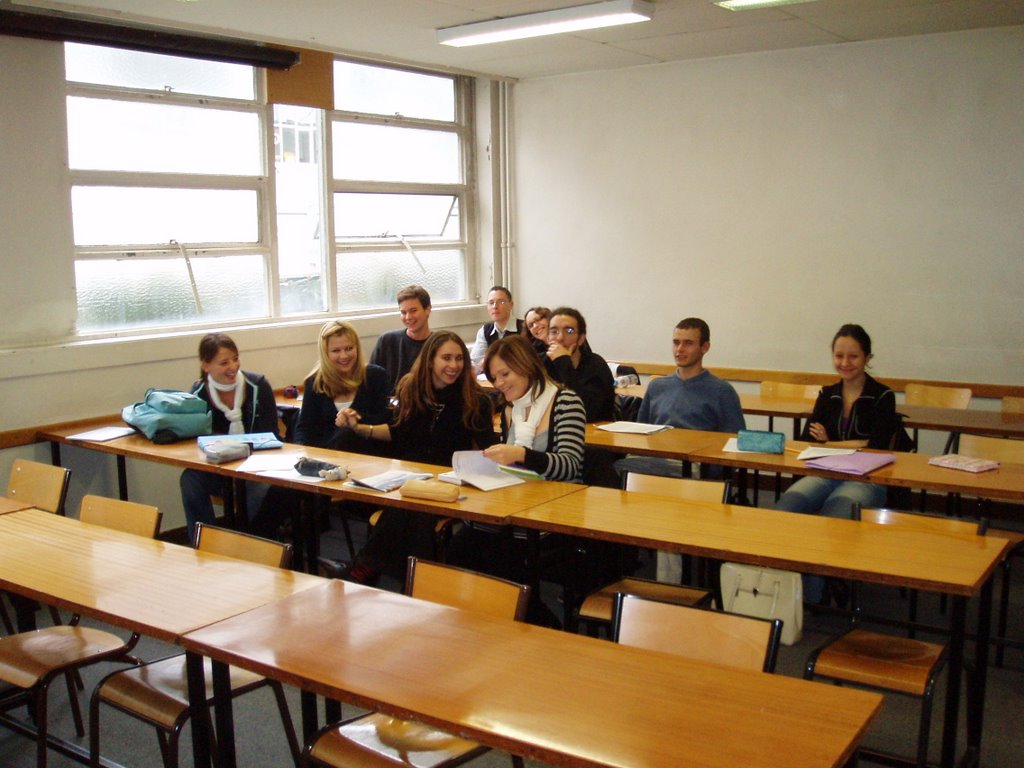
alafaco pictures


Next Week's Round Table Second Year


THE BEAR CAME OVER THE MOUNTAIN
by ALICE MUNRO

Please go to the following link:

http://www.newyorker.com/printables/archive/060605fr_archive01

Edna St. Vincent Millay, 1892 - 1950


Love Is Not All


Love is not all: it is not meat nor drink
Nor slumber nor a roof against the rain;
Nor yet a floating spar to men that sink
And rise and sink and rise and sink again;
Love can not fill the thickened lung with breath,
Nor clean the blood, nor set the fractured bone;
Yet many a man is making friends with death
Even as I speak, for lack of love alone.
It well may be that in a difficult hour,
Pinned down by pain and moaning for release,
Or nagged by want past resolution's power,
I might be driven to sell your love for peace,
Or trade the memory of this night for food.
It well may be. I do not think I would.

25 October 2006

A Noiseless Patient Spider, Walt Whitman (1819-1892)


A noiseless patient spider,
I mark'd where on a little promontory it stood isolated,
Mark'd how to explore the vacant vast surrounding,
It launch'd forth filament, filament, filament, out of itself,
Ever unreeling them, ever tirelessly speeding them.

And you O my soul where you stand,
Surrounded, detached, in measureless oceans of space,
Ceaselessly musing, venturing, throwing, seeking the spheres to connect them,
Till the bridge you will need be form'd, till the ductile anchor hold,
Till the gossamer thread you fling catch somewhere, O my soul.

24 October 2006

Henry James


I hope you are all enjoying "The Real Thing". Are you?

19 October 2006

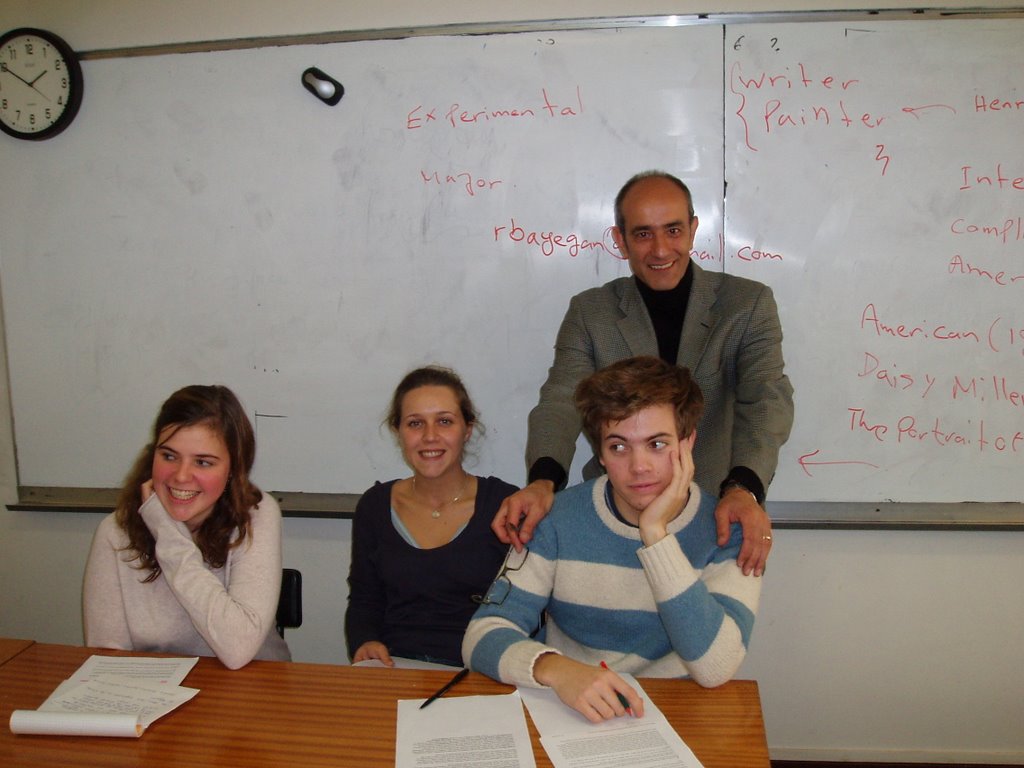
First Year alafaco Round Table


The participants in this Round Table were the first group to test the waters. I have to give them credit for trying to put a plan of attack together without having any previous examples to follow. On a scale of one to ten I give them an eight. I acknowledge however that they were ill at ease, and instead of expressing their own impressions they relied on the views of literary analysts whose work they did not digest very well. I am looking forward to their next round table.

Other Second Year photos


Second Year alafaco Round Table


On a scale of one to ten, I would mark this Round Table as a 6. All the participants in this round table could produce much better work. So they did not really live up to their potential. They were not the vigorous challenging selves I know them to be.
I am looking forward to their next performance.

Hemingway's iceberg


I always try to write on the principle of the iceberg. There is seven-eighths of it underwater for every part that shows. Anything you know you can eliminate and it only strengthens your iceberg. It is the part that doesn't show. If a writer omits something because he does not know it then there is a hole in the story.

A man can be destroyed but not defeated.

All good books have one thing in common - they are truer than if they had really happened.

All modern American literature comes from one book by Mark Twain called Huckleberry Finn.

All our words from loose using have lost their edge.

Always do sober what you said you'd do drunk. That will teach you to keep your mouth shut.

An intelligent man is sometimes forced to be drunk to spend time with his fools.

But man is not made for defeat. A man can be destroyed but not defeated.

Courage is grace under pressure.

Cowardice, as distinguished from panic, is almost always simply a lack of ability to suspend the functioning of the imagination.

Cowardice... is almost always simply a lack of ability to suspend functioning of the imagination.

Every man's life ends the same way. It is only the details of how he lived and how he died that distinguish one man from another.

For a long time now I have tried simply to write the best I can. Sometimes I have good luck and write better than I can.

For a war to be just three conditions are necessary - public authority, just cause, right motive.

Forget your personal tragedy. We are all bitched from the start and you especially have to be hurt like hell before you can write seriously. But when you get the damned hurt, use it-don't cheat with it.

12 October 2006

Robert Frost (1874–1963)

The Road Not Taken


TWO roads diverged in a yellow wood,
And sorry I could not travel both
And be one traveler, long I stood
And looked down one as far as I could
To where it bent in the undergrowth;

Then took the other, as just as fair,
And having perhaps the better claim,
Because it was grassy and wanted wear;
Though as for that the passing there
Had worn them really about the same,

And both that morning equally lay
In leaves no step had trodden black.
Oh, I kept the first for another day!
Yet knowing how way leads on to way,
I doubted if I should ever come back.
I shall be telling this with a sigh
Somewhere ages and ages hence:
Two roads diverged in a wood, and I—
I took the one less traveled by,
And that has made all the difference.

Chief Seattle's LETTER TO ALL

Chief Seattle (more correctly known as Seathl) was a Susquamish chief who lived on the islands of the Puget Sound. As a young warrier, Chief Seattle was known for his courage, daring and leadership. He gained control of six of the local tribes and continued the friendly relations with the local whites that had been established by his father. His now famous speech was believed to have been given in December, 1854. There are several versions of his letter; the following was provided by Barefoot Bob.

Chief Seattle's Letter

"The President in Washington sends word that he wishes to buy our land. But how can you buy or sell the sky? the land? The idea is strange to us. If we do not own the freshness of the air and the sparkle of the water, how can you buy them?
Every part of the earth is sacred to my people. Every shining pine needle, every sandy shore, every mist in the dark woods, every meadow, every humming insect. All are holy in the memory and experience of my people.
We know the sap which courses through the trees as we know the blood that courses through our veins. We are part of the earth and it is part of us. The perfumed flowers are our sisters. The bear, the deer, the great eagle, these are our brothers. The rocky crests, the dew in the meadow, the body heat of the pony, and man all belong to the same family.
The shining water that moves in the streams and rivers is not just water, but the blood of our ancestors. If we sell you our land, you must remember that it is sacred. Each glossy reflection in the clear waters of the lakes tells of events and memories in the life of my people. The water's murmur is the voice of my father's father.
The rivers are our brothers. They quench our thirst. They carry our canoes and feed our children. So you must give the rivers the kindness that you would give any brother.
If we sell you our land, remember that the air is precious to us, that the air shares its spirit with all the life that it supports. The wind that gave our grandfather his first breath also received his last sigh. The wind also gives our children the spirit of life. So if we sell our land, you must keep it apart and sacred, as a place where man can go to taste the wind that is sweetened by the meadow flowers.
Will you teach your children what we have taught our children? That the earth is our mother? What befalls the earth befalls all the sons of the earth.
This we know: the earth does not belong to man, man belongs to the earth. All things are connected like the blood that unites us all. Man did not weave the web of life, he is merely a strand in it. Whatever he does to the web, he does to himself.
One thing we know: our God is also your God. The earth is precious to him and to harm the earth is to heap contempt on its creator.
Your destiny is a mystery to us. What will happen when the buffalo are all slaughtered? The wild horses tamed? What will happen when the secret corners of the forest are heavy with the scent of many men and the view of the ripe hills is blotted with talking wires? Where will the thicket be? Gone! Where will the eagle be? Gone! And what is to say goodbye to the swift pony and then hunt? The end of living and the beginning of survival.
When the last red man has vanished with this wilderness, and his memory is only the shadow of a cloud moving across the prairie, will these shores and forests still be here? Will there be any of the spirit of my people left?
We love this earth as a newborn loves its mother's heartbeat. So, if we sell you our land, love it as we have loved it. Care for it, as we have cared for it. Hold in your mind the memory of the land as it is when you receive it. Preserve the land for all children, and love it, as God loves us.
As we are part of the land, you too are part of the land. This earth is precious to us. It is also precious to you.
One thing we know - there is only one God. No man, be he Red man or White man, can be apart. We ARE all brothers after all."

Carl Sandburg (1878–1967). Cornhuskers

Chicago Poet


I SALUTED a nobody.
I saw him in a looking-glass.
He smiled—so did I.
He crumpled the skin on his forehead,
frowning—so did I.
Everything I did he did.
I said, “Hello, I know you.”
And I was a liar to say so.

Ah, this looking-glass man!
Liar, fool, dreamer, play-actor,
Soldier, dusty drinker of dust—
Ah! he will go with me
Down the dark stairway
When nobody else is looking,
When everybody else is gone.

He locks his elbow in mine,
I lose all—but not him.

04 October 2006

There's a certain slant of light

by Emily Dickinson, 1830 - 1886

There's a certain slant of light,
On winter afternoons,
That oppresses, like the weight
Of cathedral tunes.
Heavenly hurt it gives us;
We can find no scar,
But internal difference
Where the meanings are.

None may teach it anything,
'Tis the seal, despair,-
An imperial affliction
Sent us of the air.

When it comes, the landscape listens,
Shadows hold their breath;
When it goes, 't is like the distance
On the look of death.

The Organization of the Course

You can find alafaco at the following address:

http://alafaco.blogspot.com/


Words to Ponder:


“Information is endlessly available to us; where shall wisdom be found?”

Harold Bloom

“A blank page is actually a whitewashed wall with no door and no window. Beginning to tell a story is like making a pass at a total stranger in a restaurant. Remember Chekhov’s Gurov in “The Lady with the dog”? Gurov beckons to the little dog, wagging his finger at it over and over again, until the lady says, blushing, “ He doesn’t bite”, whereupon Gurov asks her permission to give the dog a bone. Both Gurov and Chekhov have now been given a thread to go by; the flirtation begins and story takes off.
The beginning of almost every story is actually a bone, something with which to court the dog, which may bring you closer to the lady.”

Amos Oz

Modus Operandi

Approach:

The emphasis of the course will not be on information, but on finding our critical individual voice for evaluating and understanding the American literary experience that spans over five centuries. Genuine American literature has been to a large extent a pioneer experience. It has been the expression of a necessity to arrive at a unique personal account vis à vis the surrounding universe. Emerson in his famous essay Self Reliance exhorts his readers to “judge for yourself” and Emily Dickinson promotes the individual “house” of human consciousness that is able “to support itself”. This attitude is at the core of the American experience. To thoroughly come to terms with this viewpoint, one needs at the end to stand on one’s own intellectual feet and judge for oneself.


Evaluation:

1) Diary: An ongoing record based on a short summary of authors and concepts discussed in the class plus one or two paragraphs of personal comments and criticism at the end of each entry. Neatness and legibility is important.

2) Round Table: Students will be responsible for working together on various topics. Round tables last between ten to fifteen minutes. A team of four students can work together on a topic and offer a joint presentation.

3) Short essays of around 200 words.

4) Regular attendance and active participation in the discussions.


A word of caution: Use of secondary material without providing the source will be considered plagiarism.


Recommended Texts:

1) An Outline of American Literature by Peter B. High, Longman, 1986
2) An Introduction to American Literature: time present and time past, Françoise Grellet, Hachette, 2000
3) La Littérature américaine par Dominique Lescanne, Langues Pour Tous, 2004
posted by Ala Faco at 12:54 PM | 0 comments


Practical Criticism

Practical Criticism is a close reading of a text and writing an evaluation of that text based on first hand evidence.

A Glimpse by: Walt Whitman, 1819 - 1892

A Glimpse, through an interstice caught,
Of a crowd of workmen and drivers in a bar-room, around the stove,
late of a winter night--And I unremark'd seated in a corner;
Of a youth who loves me, and whom I love, silently approaching, and
seating himself near, that he may hold me by the hand;
A long while, amid the noises of coming and going--of drinking and
oath and smutty jest,
There we two, content, happy in being together, speaking little,
perhaps not a word.

From "Leaves of Grass", 1900
List all poems from "Leaves of Grass"

03 October 2006

Welcome to Alafaco

I would like to welcome you all to this new academic year. Last year was wonderful thanks to the interest and enthusiasm many of you contributed to the American Literature course. I am hoping that the current year will be even better. The first poem on the blog this year is one of my very favourites:

from "Asphodel, That Greeny Flower"

William Carlos Williams 1883-1963

My heart rouses
thinking to bring you news
of something
that concerns you
and concerns many men. Look at
what passes for the new.
You will not find it there but in
despised poems.
It is difficult
to get the news from poems
yet men die miserably every day
for lack
of what is found there.
Hear me out
for I too am concerned
and every man
who wants to die at peace in his bed
besides.

23 May 2006

Cloud, Castle, Lake

“Cloud, Castle, Lake,” Nabokov gives us a tale of peculiar horror wrapped up in fairy-tale whimsy.

“Cloud, Castle, Lake” is a parable on the plight of the individual who is swallowed against his will into the maw of the all-powerful Group. Vasili Ivanovich, a mild bachelor living in Germany, wins a pleasure trip at a charity ball. He hopes the trip will bring him “some wonderful, tremulous happiness,” but gets his first intimation that all will not go well when, on the train, he is requested to put down his book and join the group. From then on the trip is a nightmare of enforced jollification that becomes progressively more sinister and even violent.

At the most remote point of their itinerary, Vasili Ivanovich glimpses a landscape of such perfection that he wants to lose himself in it forever.

It was a pure, blue lake, with an unusual expression of its water. In the middle, a large cloud was reflected in its entirety. On the other side, on a hill thickly covered with verdure (and the darker the verdure, the more poetic it is), towered, arising from dactyl to dactyl, an ancient black castle. Of course, there are plenty of such views in Central Europe, but just this one—in the inexpressible and unique harmoniousness of its three principal parts, in its smile, in some mysterious innocence it had, my love! my obedient one!— was something so unique, and so familiar, and so long-promised, and it so understood the beholder that Vasili Ivanovich even pressed his hand to his heart, as if to see whether his heart was there in order to give it away.
But of course Vasili Ivanovich is not allowed to linger within his ideal. The triumphant Group tears the dreamer from the dreamscape and forcibly reinserts him into the baneful social entity.
Nabokov continued to express his detestation of totalitarianism in every form throughout the Forties: his story “Conversation

04 May 2006

The Road Not Taken

Two roads diverged in a yellow wood,
And sorry I could not travel both
And be one traveler, long I stood
And looked down one as far as I could
To where it bent in the undergrowth; 5

Then took the other, as just as fair,
And having perhaps the better claim,
Because it was grassy and wanted wear;
Though as for that the passing there
Had worn them really about the same, 10

And both that morning equally lay
In leaves no step had trodden black.
Oh, I kept the first for another day!
Yet knowing how way leads on to way,
I doubted if I should ever come back. 15

I shall be telling this with a sigh
Somewhere ages and ages hence:
Two roads diverged in a wood, and I—
I took the one less traveled by,
And that has made all the difference.

Robert Frost, 1874 - 1963. Review

After Apple-Picking

My long two-pointed ladder's sticking through a tree
Toward heaven still,
And there's a barrel that I didn't fill
Beside it, and there may be two or three
Apples I didn't pick upon some bough. 5
But I am done with apple-picking now.
Essence of winter sleep is on the night,
The scent of apples: I am drowsing off.
I cannot rub the strangeness from my sight
I got from looking through a pane of glass 10
I skimmed this morning from the drinking trough
And held against the world of hoary grass.
It melted, and I let it fall and break.
But I was well
Upon my way to sleep before it fell, 15
And I could tell
What form my dreaming was about to take.
Magnified apples appear and disappear,
Stem end and blossom end,
And every fleck of russet showing clear. 20
My instep arch not only keeps the ache,
It keeps the pressure of a ladder-round.
I feel the ladder sway as the boughs bend.
And I keep hearing from the cellar bin
The rumbling sound 25
Of load on load of apples coming in.
For I have had too much
Of apple-picking: I am overtired
Of the great harvest I myself desired.
There were ten thousand thousand fruit to touch, 30
Cherish in hand, lift down, and not let fall.
For all
That struck the earth,
No matter if not bruised or spiked with stubble,
Went surely to the cider-apple heap 35
As of no worth.
One can see what will trouble
This sleep of mine, whatever sleep it is.
Were he not gone,
The woodchuck could say whether it's like his 40
Long sleep, as I describe its coming on,
Or just some human sleep.

Marianne Moore quotes

“The deepest feeling always shows itself in silence; not in silence, but restraint”

“Poetry is the art of creating imaginary gardens with real toads.”

“There never was a war that was not inward; I must fight till I have conquered in myself what causes war.”

“Impatience is the mark of independence, not of bondage”

“Beauty is everlasting And dust is for a time..

“Psychology which explains everything explains nothing, and we are still in doubt”


“Poetry is all nouns and verbs”

“Any writer overwhelmingly honest about pleasing himself is almost sure to please others.”

“If you will tell me why the fen appears impassable, I then will tell you why I think that I can cross it if I try”

“The passion for setting people right is in itself an afflictive disease.”

Marianne Moore, 1887 - 1972

Silence


My father used to say,
"Superior people never make long visits,
have to be shown Longfellow's grave
nor the glass flowers at Harvard.
Self reliant like the cat --
that takes its prey to privacy,
the mouse's limp tail hanging like a shoelace from its mouth --
they sometimes enjoy solitude,
and can be robbed of speech
by speech which has delighted them.
The deepest feeling always shows itself in silence;
not in silence, but restraint."
Nor was he insincere in saying, "`Make my house your inn'."
Inns are not residences.


Notes

1] "My father used to say: a remark in conversation; Miss A. M. Homans, Professor Emeritus of Hygiene, Wellesley College. `My father used to say, "superior people never make long visits, then people are not so glad when you've gone." When I am visiting, I like to go about by myself. I never had to be shown Longfellow's grave nor the glass flowers at Harvard.'" [Moore's note, p. 105]

3] Longfellow: Henry Wadsworth Longfellow, US poet (1807-82).

13] "`Make my house your inn': Edmund Burke to a stranger with whom he had fallen into conversation in a bookshop. Life of Burke: James Prior; `"Throw yourself into a coach," said he. "Come down and make my house your inn."'" [Moore's note, p. 105]

_____________________

What Are Years?

What is our innocence,
what is our guilt? All are
naked, none is safe. And whence
is courage: the unanswered question,
the resolute doubt, -
dumbly calling, deafly listening-that
in misfortune, even death,
encourage others
and in it's defeat, stirs

the soul to be strong? He
sees deep and is glad, who
accededs to mortality
and in his imprisonment rises
upon himself as
the sea in a chasm, struggling to be
free and unable to be,
in its surrendering
finds its continuing.

So he who strongly feels,
behaves. The very bird,
grown taller as he sings, steels
his form straight up. Though he is captive,
his mighty singing
says, satisfaction is a lowly
thing, how pure a thing is joy.
This is mortality,
this is eternity.

03 May 2006

Mystery Poem. Who Wrote the following?

Conscience


Conscience is instinct bred in the house,
Feeling and Thinking propagate the sin
By an unnatural breeding in and in.
I say, Turn it out doors,
Into the moors.
I love a life whose plot is simple,
And does not thicken with every pimple,
A soul so sound no sickly conscience binds it,
That makes the universe no worse than 't finds it.
I love an earnest soul,
Whose mighty joy and sorrow
Are not drowned in a bowl,
And brought to life to-morrow;
That lives one tragedy,
And not seventy;
A conscience worth keeping;
Laughing not weeping;
A conscience wise and steady,
And forever ready;
Not changing with events,
Dealing in compliments;
A conscience exercised about
Large things, where one may doubt.
I love a soul not all of wood,
Predestinated to be good,
But true to the backbone
Unto itself alone,
And false to none;
Born to its own affairs,
Its own joys and own cares;
By whom the work which God begun
Is finished, and not undone;
Taken up where he left off,
Whether to worship or to scoff;
If not good, why then evil,
If not good god, good devil.
Goodness! you hypocrite, come out of that,
Live your life, do your work, then take your hat.
I have no patience towards
Such conscientious cowards.
Give me simple laboring folk,
Who love their work,
Whose virtue is song
To cheer God along.

27 April 2006

E. E. Cummings quotes

American poet 1894-1962


“We do not believe in ourselves until someone reveals that deep inside us something is valuable, worth listening to, worthy of our trust, sacred to our touch. Once we believe in ourselves we can risk curiosity, wonder, spontaneous delight or any experience that reveals the human spirit.”


“To be nobody but yourself in a world that's doing its best to make you somebody else, is to fight the hardest battle you are ever going to fight. Never stop fighting.”

“It takes courage to grow up and become who you really are.”

“The earth laughs in flowers.”

“The most wasted of all days is one without laughter.”


“Love is the voice under all silences, the hope which has no opposite in fear; the strength so strong mere force is feebleness: the truth more first than sun, more last than star...”

“The world is mud-luscious and puddle-wonderful.”

“To be nobody but yourself in a world which is doing its best, night and day, to make you everybody else means to fight the hardest battle which any human being can fight; and never stop fighting.”

“Unless you love someone, nothing else makes any sense.”

America makes prodigious mistakes, America has colossal faults, but one thing cannot be denied: America is always on the move. She may be going to Hell, of course, but at least she isn't standing still.

At least the Pilgrim Fathers used to shoot Indians: the Pilgrim Children merely punch time clocks.

Be of love a little more careful than of anything.

Humanity I love you because when you're hard up you pawn your intelligence to buy a drink.

I imagine that yes is the only living thing.

I like my body when it is with your body. It is so quite new a thing. Muscles better and nerves more.

I thank you God for this most amazing day, for the leaping greenly spirits of trees, and for the blue dream of sky and for everything which is natural, which is infinite, which is yes.

I'd rather learn from one bird how to sing than to teach ten thousand stars how not to dance.

I'm living so far beyond my income that we may almost be said to be living apart.

It takes courage to grow up and become who you really are.

It takes three to make a child.

Knowledge is a polite word for dead but not buried imagination.

Private property began the instant somebody had a mind of his own.

The world is mud-luscious and puddle-wonderful.

To be nobody but yourself in a world which is doing its best, night and day, to make you everybody else means to fight the hardest battle which any human being can fight; and never stop fighting.

Unbeing dead isn't being alive.

My Father’s Tears by John Updike

The New Yorker Magazine

Issue of 27 February 2006


Come to think of it, I saw my father cry only once. It was at the Alton train station, back when the trains still ran. I was on my way to Philadelphia to catch the train that would return me to Boston and college. I was eager to go, for already my home an my parents had become somewhat unreal to me, and college, with its courses and the hopes for my future they inspired and the girlfriend I had acquired in my sophomore year, had become more real every semester; it shocked me—threw me off track, as i were—to see that my father’s eyes, as he shook my hand goodbye, glittered with tears
I blamed it on our shaking hands: for eighteen years, we had never had occasion for this ritual, this manly contact, and we had groped our way into it only in the past few years. He was taller than I, though I was not short, and I realized, his hand warm in mine while he tried to smile, that he had a different perspective than I. I was going somewhere, and he was seeing me go. I was growing in my own sense of myself, and to him I was getting smaller. He had loved me, it came to me as never before. It was something that had not needed to be said before, and now his tears were saying it.
The old Alton station was his kind of place, savoring of transit and the furtive small pleasures of city life. I had bought my first pack of cigarettes here, with no protest from the man running the newsstand, though I was a young-looking fifteen. He simply gave me my change and a folder of matches advertising Sunshine beer, Alton’s local brand. Alton was a middle-sized industrial city that had been depressed ever since the textile mills began to slide South. In the meantime, with its orderly street grid and hearty cuisine, it still supplied its citizens with traditional comforts and an illusion of well-being. I lit up a block from the station, as I remember, and even though I didn’t know how to inhale, my nerves took a hit; the sidewalk seemed to lift toward me and the whole world felt lighter. From that day forward I began to catch up, socially, with the more glamorous of my peers, who already smoked.
Even my stay-at-home mother, no traveller but a reader, had a connection to the station: it was the only place in the city where you could buy The American Mercury and The Atlantic Monthly. Like the stately Carnegie library two blocks down Franklin Street, it was a place you felt safe inside. It had been built for eternity, when the railroads looked to be with us forever—a foursquare granite temple with marble floors, a high ceiling whose gilded coffers glinted through a coating of coal smoke, and tall-backed waiting benches as grave as church pews. The radiators clanked and the walls murmured as if giving back some of the human noise they absorbed, day and night. The newsstand and coffee shop were usually busy, and the waiting room was always warm, as my father and I had discovered on more than one winter night. We had been commuters to the same high school, he as a teacher and I as a student, in secondhand cars that on more than one occasion failed to start, or got stuck in a snowstorm. We would make our way to the station, one place sure to be open.
We did not foresee, that moment on the platform as the signal bells a half mile down the tracks warned of my train’s approach, that within a decade passenger service to Philadelphia would stop, and that eventually the station, like stations all across the East, would be padlocked and boarded up. It stood on its empty acre of asphalt parking space like an oversized mausoleum. All the life it had once contained was sealed into silence, and for most of the rest of the century it ignominiously waited, in this city where progress was slow, to be razed.
But my father did foresee, the glitter in his eyes told me, that time consumes us—that the boy I had been was dying if not already dead, and we would have less and less to do with each other. I had taken my life from his, and now I was stealing away with it. The train appeared, the engine, with its shining long connecting rods and high steel wheels, out of all proportion to the little soft bodies it dragged along. I boarded it. My parents looked smaller, foreshortened. We waved sheepishly through the smirched glass. I opened my book—“The Complete Poetical Works of John Milton”—before Alton’s gritty outskirts had fallen away.
At the end of that long day of travel, getting off not at Boston’s South Station but at Back Bay, one stop earlier and closer to Cambridge, I was met by my girlfriend. How swanky that felt, to read Milton all day, the relatively colorless and hard-to-memorize pentameters of “Paradise Regained,” and, in sight of the other undergraduates disembarking, to be met and embraced on the platform by a girl—no, a woman—wearing a gray cloth coat, canvas tennis sneakers, and a ponytail. It must have been spring break, because if Deb was greeting me the vacation had been too short for her to go back and forth to St. Louis, where her home was. Instead, she had been waiting a week for me to return. She tended to underdress in the long New England winter, while I wore the heavy winter coat, with buckled belt and fleecy lining, that my parents had bought me, to my embarrassment, to keep me from catching colds up in New England.
She told me, as we rode first the Green Line and then the Red back to Harvard Square, what had happened to her that week. There had been an unpredicted snow squall, whose sullied traces were still around us, and she was angry to the point of tears at having been given, because of her college education, in the restaurant where she was a part-time waitress, the assignment of adding up numbers in the basement while the other waitresses pocketed all the tips. I told her what I could recall of my week in Pennsylvania, already faded in memory except for the detail lodged there like a glittering splinter—my father’s tears. My own eyes itched and burned after a day of reading in a jiggling train; I lifted them only to admire the shining water as the train travelled the stretch of track around New London.

In the years when we were newly married and still childless, Deb and I would spend a summer month with each set of parents. Her father was an eminent Unitarian minister, who preached in a gray neo-Gothic edifice built for eternity near the Washingto University campus. Each June he moved his family from the roomy brick parsonage on Lindell Boulevard to an abandoned Vermont farmhouse he had bought in the nineteen-thirties for less than five hundred dollars. Some Junes, Deb and I arrived befor her father’s parish duties permitted him and the rest of his family, a wife and two other daughters, to be there. The chilly solitude of the place, with basic cold-water plumbing but no electricity, high on a curving dirt road whose only visible house, a hal mile away, was occupied by another Unitarian minister, reinforced my sense of having moved up, thanks to my blue-eyed bride, into a new, more elevated and spacious territory
The lone bathroom was a long room, its plaster walls and wooden floor both bare, that was haunted by a small but intense rainbow, which moved around the walls as the sun in the course of the day glinted at a changing angle off the bevelled edge of the mirror on the medicine cabinet. When we troubled to heat up enough water on the kerosene stove for a daylight bath, the prismatically generated rainbow kept the bather company; it quivered and bobbed when footsteps or a breath of wind made the house tremble. To me this Ariel-like phenomenon was the magical child of Unitarian austerity, symbolic of the lofty attitude that sought out a primitive farmhouse as a relief from well-furnished urban comfort. It had to do, I knew, drawing upon my freshly installed education, with idealism, with Emerson and Thoreau, with self-reliance and taking Nature on Nature’s terms. A large side room in the house, well beyond the kerosene stove’s narrow sphere of warmth, held a big loom frame that had come with the house, and an obsolete encyclopedia, and a set, with faded spines, of aged but rarely touched books entitled “The Master Works of World Philosophy.” When I broke precedent by taking one of the volumes down, its finely ridged cloth cover gave my fingers an unpleasant tingle. It was the volume containing selections from Emerson’s essays. “Every natural fact is a symbol of some spiritual fact,” I read, and “Everything is made of one hidden stuff,” and “Every hero becomes a bore at last,” and “We boil at different degrees.”
Deb used this large room, and the vine-shaded stone porch outside, to paint her careful oils and pale watercolors. When the day was sunny, and heating the tub water on the kerosene stove seemed too much trouble, we bathed in the mountain creek an easy walk from the house, in a pond whose dam her father had designed and built. I wanted to take her nude photograph with my Brownie Hawkeye, but she primly declined. One day I sneaked a few snapshots anyway, from the old bridge, while she, with exclamations that drowned out the noise of the shutter, waded in and took the plunge.
It was in Vermont, before the others arrived, that, by our retrospective calculations, we conceived our first child, unintentionally but with no regrets. This microscopic event deep within my bride became allied in my mind with the little rainbow low on the bathroom wall, our pet imp of refraction.

Her father, when he arrived, was a father I wasn’t used to. Mine, though he had sufficient survival skills, enacted the role of an underdog, a man whose every day, at school or elsewhere, proceeded through a series of scrapes and embarrassments. The ca wouldn’t start, the students wouldn’t behave. He needed people, the rub of them, for stimulation. Reverend Whitworth liked Vermont because, compared with St. Louis, it had no people in it. He didn’t leave his hill for weeks at a time, letting the rest of u drive the two miles of dirt road to the nearest settlement, where the grocery store, the hardware store, and the post office all occupied one building, with one proprietor, who also managed the local sawmill. We would come back with local gossip and a day-old newspaper, and my father-in-law would listen to our excited tales of the greater world with a tilted head and a slant smile that let us guess he wasn’t hearing a word. He had things to do: he built stone walls, and refined the engineering of his dam, an took a daily nap, during which the rest of us were to be silent
He was a handsome man, with a head of tightly wiry hair whose graying did not diminish its density, but he was frail inside from rheumatic fever in his Maine boyhood. Rural peace, the silence of woods, the sway and flicker of kerosene light as drafts blew on the flaming wick and lamps were carried from room to room—these were his elements, not city bustle. During these hilltop vacation months, he moved among us—his wife, his three daughters, his son-in-law, his wife’s spinster sister—like a planet exempt from the law of gravitational attraction.
His interactions came mostly with games, which he methodically tended to win—family croquet in the afternoons, family Hearts in the evening, in the merged auras of the kerosene stove and the mantle lamp on the table. This was a special lamp, which intensified and whitened the glow of a flame with a mantle, a kind of conical net of ash so delicate it could be broken by even a carelessly rough setting-down of the glass base on the table. Reverend Whitworth was ostentatiously careful in everything his hands did, and I resented this, with the implacable ressentiment of youth. I resented his fussy pipesmoker’s gestures as he tamped and lighted and puffed; I resented his strictly observed naps, his sterling blue eyes (which Deb had inherited), his untroubled Unitarianism. Somehow, in my vicinity of Pennsylvania blue eyes were so rare as to be freakish—hazel was as far as irises ventured from the basic brown the immigrants from Wales and southern Germany had brought to the Schuylkill Valley.
As for Unitarianism, it seemed so milky, so smugly vague and evasive: an unimpeachably featureless dilution of the Christian religion as I had met it in its Lutheran form—the whole implausible, colorful, comforting tapestry of the Incarnation and the Magi, Christmas carols and Santa Claus, Adam and Eve, nakedness and the Tree of the Knowledge of Good and Evil, the serpent and the Fall, betrayal in the garden and Redemption on the Cross, “Why hast Thou forsaken me?” and Pilate washing his hands and Resurrection on the third day, posthumous suppers in an upper room and doubting Thomas and angels haunting the shadier margins of Jerusalem, the instructions to the disciples and Paul’s being knocked from his donkey on the road to Damascus and the disciples talking in tongues (a practice at which the stolid churchgoers of Alton and its environs did draw the line). Our public-school day began with a Bible reading and the Lord’s Prayer; our teachers and bankers and undertakers and mailmen all professed to be conventional Christians, and what was good enough for them should have been, I think I thought, good enough for Unitarians. I had read enough Kierkegaard and Barth and Unamuno to know about the leap of faith, and Reverend Whitworth was not making that leap; he was taking naps and building stone walls instead. In his bedroom I spotted a paperback Tillich, “The Courage to Be,” probably, but I never caught him reading it, or “The Master Works of World Philosophy,” either. The only time I felt him as a holy man was when, speaking with deliberate tenderness to one of his three daughters, he slipped into a “thee” or “thou” from his Quaker boyhood.
He was to be brought low, all dignity shed, before he died. Alzheimer’s didn’t so much invade his brain as deepen the benign fuzziness and preoccupation that had always been there. At the memorial service for his wife, dead of cancer, he turned to me before the service began and said, with a kindly though puzzled smile, “Well, James, I don’t quite know what’s up, but I guess it will all come clear.” He didn’t realize that his wife of forty-five years was being memorialized.
With her gone, he deteriorated rapidly. At the nursing home where we finally took him, he began to whimper at the admission desk, and jiggle up and down as if bouncing something in his pants, and I knew he needed to urinate, but I lacked the manliness to lead him quickly to the lavatory and take his penis out of his fly for him, so he wet himself and the floor. I was, in those years just before my divorce from Deb, the eldest son-in-law, the first mate, as it were, of the extended family, and I was failing in my role, though still taking a certain pride in it. My father-in-law had always, curiously, from those first summers in Vermont, trusted me—trusted me first with his daughter’s well-being, and then with helping him lift the stones into place on his wall, where I could have pinched one of his fingers or dropped a rock on his toes.
I loved him, in fact. As innocent of harm as my own father, he made fewer demands on those around him. A little silence during his nap does not seem, now, too much to ask, though at the time it irritated me. His theology, or lack of it, seems one of the spacious views I enjoyed thanks to him. His was a cosmos from which the mists of superstition had almost cleared. His parish, there in the Gateway to the West, included university existentialists, and some of their hip philosophy buffed up his old-fashioned transcendentalist sermons, which he delivered in a beautiful voice, tentatively. Though Unitarian, he was of the theist branch, Deb would tell me in bed, hoping to mediate between us. I wasn’t, as I remember it, graceless enough to quarrel with him often, but he could not have been ignorant of my Harvard neo-orthodoxy, with its Eliotic undercurrent of panic.
In Vermont, my household task was to burn the day’s wastepaper, in a barrel up the slope behind the house, toward the spring that supplied our cold water. One could look across twenty miles of wooded valley to the next ridge of the Green Mountains. With Reverend Whitworth’s blessing, I had been admitted to a world of long views and icy swims and New England reticence. He was a transparently good man who took himself with a little Maine salt. It is easy to love people in memory; the hard trick is to love them when they are there, in front of you.

Pennsylvania had its different tensions for Deb and me. We had gotten off to a bad start. The first time I brought her home to meet my parents, we disembarked at the wrong train station. The train from Philadelphia was a local. One of its stops was a hill factory town seven miles from Alton, also along the Schuylkill and closer by a few miles to the country farmhouse to which we had moved, at my mother’s instigation, after the war. We were among a handful of passengers to get off the train, and th platform in its tunnel of trees soon emptied. No one had come to meet us. My parents, in spite of arrangements clear in my own mind—I was trying to save them mileage—had gone to Alton
Now I wonder how, in that era before cell phones, we managed to make contact. But in that same era even little railroad stations still were manned; perhaps the stationmaster telegraphed word of our plight to Alton and had my parents paged in the echoing great station. Or perhaps, by the mental telegraphy that used to operate in backward regions, they guessed the truth when we didn’t disembark and simply drove to where we were. I was a young swain, and Deb, so securely in her element in St. Louis or Cambridge, seemed lost in my home territory. I kept failing to protect her from our primitive ways. Blamelessly, she kept doing things wrong.
Though we were not yet married, she had put some dirty socks and underwear of mine through her own laundry, and packed them, clean, in her suitcase. When my mother, helpfully hovering in the guest bedroom, noticed this transposition, she let loose one of her silent bursts of anger, a merciless succession of waves that dyed an angry red V on her forehead, between the eyebrows, and filled the little sandstone house to its corners, upstairs and down. The house of my childhood, in the town of Olinger, a mere trolley-car ride from Alton, had been a long narrow brick one, with a long back yard, so there were places to escape to when my mother was, in my father’s bemused phrase, “throwing an atmosphere.” But in the new house we could all hear one another turn over in bed at night, and even the out-of-doors, buzzing with insects and seething with weeds, offered no escape from my mother’s psychological heat. I had grown up with her aggrieved moods, turned on usually by adult conflicts out of my sight and hearing. She could maintain one for days until, coming home from school or a friend’s house, I would find it miraculously lifted. Her temper was part of my growing up, like Pennsylvania mugginess and the hot spells that could kill old people in their stifling row houses and expand the steel tracks on the street enough to derail trolley cars.
Whispering, I tried to apologize for this climate to Deb, while my mother’s sulk, which had frozen all our tongues during dinner, continued to emanate from her bedroom down into the living room. The click of her latch had reverberated above us like a thunderclap. “You didn’t do anything wrong,” I assured Deb, though in my heart I felt that offending my mother was wrong, a primal wrong. I blamed Deb for mixing up my underwear with hers; she should have anticipated the issue, the implications. “It’s the way she is.”
“Well, she should wake up and get over it” was Deb’s response, so loud I feared it could be heard upstairs. Amazed, I realized that she wasn’t tuned as finely as I to the waves of my mother’s anger.
Near the sofa where we sat, my father, dolefully correcting math papers in the rocking chair, said, “Mildred doesn’t mean anything by it. It’s her femininity acting up.”
Femininity explained and justified everything for his sexist generation, but not for mine. I was mortified by this tension. That same visit, perhaps, or later, Deb, thinking she was doing a good deed, began on Sunday morning to weed the patch of pansies my mother had planted near the back porch and then neglected. Deb stood uncomprehending, her feet sweetly bare in the soft soil, like Ingrid Bergman’s in “Stromboli,” when I explained that around here nobody worked on Sundays; they went to church. “How silly,” Deb said. “My father all summer does his walls and things on Sundays.”
“He’s a different denomination.”
“Jim, I can’t believe this. I really can’t.”
“Sh-h-h. She’s inside, banging dishes around.”
“Well, let her. They’re her dishes.”
“And we have to get ready for church.”
“I didn’t bring church clothes.”
“Just put on shoes and the dress you wore down on the train.”
“Shit I will. I’d look ridiculous. I’d rather stay here and weed. Your grandparents will be staying, won’t they?”
“My grandmother. My grandfather goes. He reads the Bible every day on the sofa, haven’t you noticed?”
“I didn’t know there were places like this left in America.”
“Well—” My answer was going to be lame, she saw, so she interrupted, with those sterling blue eyes. “I see now where you get your nonsense from, being so rude to Daddy.”
I was scandalized but thrilled, perceiving that a defense against my mother was possible. In the event, Deb stayed with my grandmother, who was disabled and speechless with Parkinson’s disease. My rudeness to Reverend Whitworth was revenged when, baptizing our first child, his first grandchild, in a thoroughly negotiated Unitarian family service in the house of her Lutheran grandparents, he made a little joke about the “holy water”—water fetched from our own spring, which was down below the house instead of, as in Vermont, up above it. My mother sulked for the rest of the day about that, and always spoke of Catherine, our first child, as “the baby who didn’t get baptized.” By the time the three other babies arrived, Deb and I had moved to Massachusetts, where we had met and courted, and joined the Congregational Church as a reasonable compromise.

We are surrounded by holy water; all water, our chemical mother, is holy. Flying from Boston to New York, my habit is to take a seat on the right-hand side of the plane, but the other day I sat on the left, and was rewarded, at that hour of midmorning by the sun’s reflections on the waters of Connecticut—not just the rivers and the Sound but little ponds and pools and glittering threads of water that for a few seconds hurled silver light skyward into my eyes. My father’s tears for a moment had caught th light; that is how I saw them. When he was dead, Deb and I divorced. Why? It’s hard to say. We boil at different degrees, Emerson said, and a woman came along who had my boiling point. The snapshots I took of Deb naked, interestingly, she claimed a part of her just settlement. It seemed to me they were mine—I’d taken them. But she said her body was hers
After our divorce, my mother told me, of my father, “He worried about you two from the first time you brought her home. He didn’t think she was feminine enough for you.”
“He was big on femininity,” I said, not knowing whether to believe her or not. The dead are so easy to misquote.

My reflex is always to come to Deb’s defense, even though it was I who wanted the divorce. It shocks me, at my high-school class reunions, when my classmates bother to tell me how much they prefer my second wife. It is true, Sylvia really mixes it u with them, in a way that Deb shyly didn’t. But then Deb assumed that they were part of my past, something I had put behind me but reunited with every five years or so, whereas Sylvia, knowing me in my old age, recognizes that I have never really lef Pennsylvania, that it is where the self I value is stored, however infrequently I check on its condition. The most recent reunion, the fifty-fifth, might have depressed Deb—all these people in their early seventies, most of them still living in the county withi a short drive of where they had been born, even in the same semi-detached house where they had been raised. Some came in wheelchairs, and some were too sick to drive and were chauffeured to the reunion by their middle-aged children. The list of ou deceased classmates on the back of the program grows longer; the class beauties are gone to fat or bony cronehood; the sports stars and non-athletic alike move about with the aid of pacemakers and plastic knees, retired and taking up space at an age whe most of our fathers were considerately dead
But we don’t see ourselves that way, as lame and old. We see kindergarten children—the same round fresh faces, the same cup ears and long-lashed eyes. We hear the gleeful shrieking during elementary-school recess and the seductive saxophones and muted trumpets of the homebred swing bands that serenaded the blue-lit gymnasium during high-school dances. We see in each other the enduring simplicities of a town rendered changeless by Depression and then by a world war whose bombs never reached us, though rationing and toy tanks and air-raid drills did. Old rivalries are rekindled and put aside; old romances flare for a moment and subside into the general warmth, the diffuse love. When the class secretary, dear Ann Mahlon, her luxuriant head of chestnut curls now whiter than bleached laundry, takes the microphone and runs us through a quiz on the old days—teachers’ nicknames, the names of vanished luncheonettes and ice-cream parlors, the titles of our junior and senior plays, the winner of the scrap drive in third grade—the answers are shouted out on all sides. Not one piece of trivia stumps us: we were there, together, then, and the spouses, Sylvia among them, good-naturedly applaud so much long-hoarded treasure of useless knowing.
These were not just my classmates; they had been my father’s students, and his memory kept coming up. He was several times the correct answer—“Mr. Werley!”—in Ann Mahlon’s quiz. Cookie Behn, who had been deposited in our class by his failing grades and who, a year older than we, already had Alzheimer’s, kept coming up to me in the circulation after dinner, squinting as if at a strong light and huskily, ardently asking me, “Your father, Jimbo—is he still with us?” He had forgotten the facts but remembered that saying “still alive,” like the word “dead,” was somehow tactless.
“No, Cookie,” I said each time. “He died in 1972, of his second heart attack.” Oddly, it did not feel absurd to be calling a seventy-four-year-old man on a pronged cane Cookie.
He nodded, his expression grave as well as mildly puzzled. “I’m sorry to hear that,” he said.
I said, “I’m sorry to tell you,” though my father would have been over a hundred and running up big bills in a nursing home.
“And your mother, Jim?” Cookie persisted.
“She outlived him by seventeen years,” I told him, curtly, as if I resented the fact. “She was a happy widow.”
“She was a very dignified lady,” he said slowly, nodding as if to agree with himself. It touched me that he was attempting to remember my mother, and that what he said was, after all, true enough of her in her relations with the outside world. She had been outwardly dignified and, in her youth, beautiful or, as she once put it to me during her increasingly frank long widowhood, “not quite beautiful.”
My father had died when Deb and I were in Italy. We had gone there, with another couple in trouble, to see if we couldn’t make the marriage “work.” Our hotel in Florence was a small one with a peek at the Arno; returning from a trip to Fiesole—its little Roman stadium, its little museum—we had impulsively decided, the four of us, to have an afternoon drink in the hotel’s upstairs café, rather than return to the confinement of our rooms. The place was empty except for some Germans drinking beer in a corner, and some Italians standing up with espressos at the bar. If I heard the telephone ring at all, I assumed it had nothing to do with me. But the bartender came from behind the bar and walked over to me and said, “Signor Wer-lei? Telephone for you.” Who could know I was here?
It was my mother, sounding very small and scratchy. “Jimmy? Were you having fun? I’m sorry to disturb you.”
“I’m impressed you could find me.”
“The operators helped,” she explained.
“What’s happened, Mother?”
“Your father’s in the hospital. With his second heart attack.”
“How bad is it?”
“Well, he sat up in the car as I drove him into Alton.”
“Well, then, it isn’t too bad.”
There was a delay in her responses that I blamed on the transatlantic cable. She said at last, “I wouldn’t be too sure of that.” Except when we talked on the telephone, I never noticed what a distinct Pennsylvania accent my mother had. When we were face to face, her voice sounded as transparent as my own. “He woke up with this pressing feeling on his chest, and usually he ignores it. He didn’t today. It’s noon here now.”
“So you want me to come back,” I accused her. I knew my father wouldn’t want me inconvenienced. We had reservations for the Uffizi tomorrow.
She sighed; the cable under the ocean crackled. “Jimmy, I think you better. You and Deb, of course, unless she’d rather stay there and enjoy the art. Dr. Shirk doesn’t like what he’s hearing, and you know how hard to impress he usually is.”
This was before open-heart surgery and angioplasty; there was little for doctors to do then but listen with a stethoscope and prescribe nitroglycerin. The concierge looked up the next train to Rome, the other couple saw us to the Florence station—just beyond the Medici chapels, which we had always wanted to see, and were destined never to see together. In Rome, the taxi-driver found an airline office that was open. I will never forget the courtesy and patience with which that young airline clerk, in his schoolbook English, took our tickets to Boston the next week and converted them into tickets to Philadelphia the next day. More planes flew then. We made an evening flight to London, and had to lay over for the night. On the side of Heathrow away from London there turned out to be a world of new, tall hotels for passengers in transit. We got into our room around midnight. I called my mother—it was suppertime in Pennsylvania—and learned that my father was dead. To my mother, it was news a number of hours old, and she described in weary retrospect her afternoon of sitting in the Alton hospital and receiving increasingly dire reports. She said, “Doc Shirk said he fought real hard at the end. It was ugly.”
I hung up, and shared the news with Deb. She put her arms around me in the bed and told me, “Cry.” Though I saw the opportunity, and the rightness of it, I don’t believe I did. My father’s tears had used up mine.

Mystery Text. Who Wrote the following?

There has been something in the Vancouver papers about a cougar - she thinks it was on this coast - mauling a child.
Who would want to live where you have to share every part of outdoor space with hostile and marauding animals?

Kallipareos. Of the lovely cheeks. Now she has it. The Homeric word is sparkling on her book. And beyond that she is suddenly aware of all her Greek vocabulary, of everything which seems to have been in a closet for nearly six months now. Because she was not teaching Greek, she put it away.
That is what happens. You put it away for a while, and now and again you look in the closet for something else and you remember, and you think, soon. Then it becomes something that is just there, in the closet, and other things get crowded in front of it and on top of it and finally you don’t think about it at all.

The thing that was your bright treasure. You don’t think about it. A loss you could not contemplate at one time, and now it becomes something you can barely remember.

That is what happens.

And even if it’s not put away, even if you make your living from it, every day?

Juliet thinks of the older teachers at the school, how little most of them care for whatever it is that they teach. Take Juanita, who chose Spanish because it goes with her Christian name (She is Irish) and who wants to speak it well, to use it in her travels. You cannot say that Spanish is her treasure.

Few people, very few, have a treasure, and if you do you must hang on to it. You must not let yourself be waylaid, and have it taken from you.

26 April 2006

e.e. cummings 1894-1962

since feeling is first
who pays any attention
to the syntax of things
will never wholly kiss you;
wholly to be a fool
while Spring is in the world

my blood approves,
and kisses are a better fate
than wisdom
lady i swear by all flowers. Don't cry
--the best gesture of my brain is less than
your eyelids' flutter which says

we are for each other: then
laugh, leaning back in my arms
for life's not a paragraph

And death i think is no parenthesis

________________
In Just-
spring when the world is mud-
luscious the little
lame balloonman

whistles far and wee

and eddieandbill come
running from marbles and
piracies and it's
spring

when the world is puddle-wonderful

the queer
old balloonman whistles
far and wee
and bettyandisbel come dancing

from hop-scotch and jump-rope and

it's
spring
and
the

goat-footed

balloonMan whistles
far
and
wee

_____________________

it may not always be so; and i say
that if your lips, which i have loved, should touch
another's, and your dear strong fingers clutch
his heart, as mine in time not far away;
if on another's face your sweet hair lay
in such a silence as i know, or such
great writhing words as, uttering overmuch,
stand helplessly before the spirit at bay;
if this should be, i say if this should be-
you of my heart, send me a little word;
that i may go unto him, and take his hands,
saying, Accept all happiness from me.
Then shall i turn my face, and hear one bird
sing terribly afar in the lost lands.


somewhere i have never travelled, gladly beyond
any experience, your eyes have their silence:
in your most frail gesture are things which enclose me,
or which i cannot touch because they are too near
your slightest look easily will unclose me
though i have closed myself as fingers,
you open always petal by petal myself as Spring opens
(touching skilfully, mysteriously) her first rose

or if your wish be to close me,i and
my life will shut very beautifully,suddenly,
as when the heart of this flower imagines
the snow carefully everywhere descending;

nothing which we are to perceive in this world equals
the power of your intense fragility:whose texture
compels me with the colour of its countries,
rendering death and forever with each breathing

(i do not know what it is about you that closes
and opens;only something in me understands
the voice of your eyes is deeper than all roses)
nobody,not even the rain,has such small hands

_______

Maggie and Milly and Molly and May

Maggie and Milly and Molly and May
went down to the beach (to play one day).
and Maggie discovered a shell that sang
so sweetly she couldn't remember her troubles, and
Milly befriended a stranded star
whose rays five languid fingers were;
and Molly was chased by a horrible thing
which raced sideways while blowing bubbles; and
May came home with a smooth round stone
as small as a world and as large as alone
for whatever we lose (like a you or a me)
it's always ourselves we find in the sea.

Walt Whitman (1819-1892)

Song of the Open Road


Afoot and light-hearted I take to the open road,
Healthy, free, the world before me,
The long brown path before me leading wherever I choose.

Henceforth I ask not good-fortune, I myself am good-fortune,
Henceforth I whimper no more, postpone no more, need nothing,
Done with indoor complaints, libraries, querulous criticisms,
Strong and content I travel the open road.

The earth, that is sufficient,
I do not want the constellations any nearer,
I know they are very well where they are,
I know they suffice for those who belong to them.

(Still here I carry my old delicious burdens,
I carry them, men and women, I carry them with me wherever I go,
I swear it is impossible for me to get rid of them,
I am fill'd with them, and I will fill them in return.)

05 April 2006

Alice Munro 1931

I can't play bridge. I don't play tennis. All those things that people learn, and I admire, there hasn't seemed time for. But what there is time for is looking out the window.


I have recently re-read much of Chekhov and it's a humbling experience. I don't even claim Chekhov as an influence because he influenced all of us. Like Shakespeare his writing shed the most perfect light - there's no striving in it, no personality. Well, of course, wouldn't I love to do that!


I want the reader to feel something is astonishing. Not the 'what happens,' but the way everything happens. These long short story fictions do that best, for me.


In my own work, I tend to cover a lot of time and to jump back and forward in time, and sometimes the way I do this is not very straightforward.


In twenty years I've never had a day when I didn't have to think about someone else's needs. And this means the writing has to be fitted around it.


Memory is the way we keep telling ourselves our stories - and telling other people a somewhat different version of our stories.


Sometimes I get the start of a story from a memory, an anecdote, but that gets lost and is usually unrecognizable in the final story.


That's something I think is growing on me as I get older: happy endings.


The complexity of things - the things within things - just seems to be endless. I mean nothing is easy, nothing is simple.


The deep, personal material of the latter half of your life is your children. You can write about your parents when they're gone, but your children are still going to be here, and you're going to want them to come and visit you in the nursing home.


The stories are not autobiographical, but they're personal in that way. I seem to know only the things that I've learned. Probably some things through observation, but what I feel I know surely is personal.


When I'm doing the first draft, I have a so-much-a-day schedule. But when I start putting it on the computer I can get carried away, and I try to go as far as I can every day, as if I were going to die in the night or something.

01 April 2006

A Note On Mystery Poems

Simply leave your name on the comments section of the poem. Either write an explanation of the meaning of the poem in one sentence together with your name, or be prepared to tell the class on Thursday in one sentence what the poem means and earn yourself 5 points towards your final mark.

Thanks
R.B.

Mystery Poem #2. Who Wrote the following?

A Dream Pang

I had withdrawn in forest, and my song
Was swallowed up in leaves that blew alway;
And to the forest edge you came one day
(This was my dream) and looked and pondered long,
But did not enter, though the wish was strong:
you shook your pensive head as who should say,
'I dare not--to far in his footsteps stray-
He must seek me would he undo the wrong.'

Not far, but near, I stood and saw it all
behind low boughs the trees let down outside;
And the sweet pang it cost me not to call
And tell you that I saw does still abide.
But 'tis not true that thus I dwelt aloof,
For the wood wakes, and you are here for proof

Mystery Poem #1. Who Wrote the following?

A Dream Girl


YOU will come one day in a waver of love,
Tender as dew, impetuous as rain,
The tan of the sun will be on your skin,
The purr of the breeze in your murmuring speech,
You will pose with a hill-flower grace. 5

You will come, with your slim, expressive arms,
A poise of the head no sculptor has caught
And nuances spoken with shoulder and neck,
Your face in a pass-and-repass of moods
As many as skies in delicate change 10
Of cloud and blue and flimmering sun.

Yet,
You may not come, O girl of a dream,
We may but pass as the world goes by
And take from a look of eyes into eyes, 15
A film of hope and a memoried day.