Followers

05 March 2007

‘Preface’ to The Nigger of the Narcissus


by Joseph Conrad

A work that aspires, however humbly, to the condition of art should carry its justification in every line. And art itself may be defined as a single-minded attempt to render the highest kind of justice to the visible universe, by bringing to light the truth, manifold and one, underlying its every aspect. It is an attempt to find in its forms, in its colors, in its light, in its shadows, in the aspects of matter and in the facts of life what of each is fundamental, what is enduring and essential--their one illuminating and convincing quality--the very truth of their existence. The artist, then, like the thinker or the scientist, seeks the truth and makes his appeal. Impressed by the aspect of the world the thinker plunges into ideas, the scientist into facts--whence, presently, emerging they make their appeal to those qualities of our being that fit us best for the hazardous enterprise of living. They speak authoritatively to our common-sense, to our intelligence, to our desire of peace or to our desire of unrest; not seldom to our prejudices, sometimes to our fears, often to our egoism--but always to our credulity. And their words are heard with reverence, for their concern is with weighty matters: with the cultivation of our minds and the proper care of our bodies, with the attainment of our ambitions, with the perfection of the means and the glorification of our precious aims.
It is otherwise with the artist.
Confronted by the same enigmatical spectacle the artist descends within himself, and in that lonely region of stress and strife, if he be deserving and fortunate, he finds the terms of his appeal. His appeal is made to our less obvious capacities: to that part of our nature which, because of the warlike conditions of existence, is necessarily kept out of sight within the more resisting and hard qualities--like the vulnerable body within a steel armor. His appeal is less loud, more profound, less distinct, more stirring--and sooner forgotten. Yet its effect endures forever. The changing wisdom of successive generations discards ideas, questions facts, demolishes theories. But the artist appeals to that part of our being which is not dependent on wisdom; to that in us which is a gift and not an acquisition--and, therefore, more permanently enduring. He speaks to our capacity for delight and wonder, to the sense of mystery surrounding our lives; to our sense of pity, and beauty, and pain; to the latent feeling of fellowship with all creation--and to the subtle but invincible conviction of solidarity that knits together the loneliness of innumerable hearts, to the solidarity in dreams, in joy, in sorrow, in aspirations, in illusions, in hope, in fear, which binds men to each other, which binds together all humanity--the dead to the living and the living to the unborn.
It is only some such train of thought, or rather of feeling, that can in a measure explain the aim of the attempt, made in the tale which follows, to present an unrestful episode in the obscure lives of a few individuals out of all the disregarded multitude of the bewildered, the simple and the voiceless. For, if any part of truth dwells in the belief confessed above, it becomes evident that there is not a place of splendor or a dark corner of the earth that does not deserve, if only a passing glance of wonder and pity. The motive then, may be held to justify the matter of the work; but this preface, which is simply an avowal of endeavor, cannot end here--for the avowal is not yet complete.
Fiction--if it at all aspires to be art--appeals to temperament. And in truth it must be, like painting, like music, like all art, the appeal of one temperament to all the other innumerable temperaments whose subtle and resistless power endows passing events with their true meaning, and creates the moral, the emotional atmosphere of the place and time. Such an appeal to be effective must be an impression conveyed through the senses; and, in fact, it cannot be made in any other way, because temperament, whether individual or collective, is not amenable to persuasion. All art, therefore, appeals primarily to the senses, and the artistic aim when expressing itself in written words must also make its appeal through the senses, if its high desire is to reach the secret spring of responsive emotions. It must strenuously aspire to the plasticity of sculpture, to the color of painting, and to the magic suggestiveness of music--which is the art of arts. And it is only through complete, unswerving devotion to the perfect blending of form and substance; it is only through an unremitting never-discouraged care for the shape and ring of sentences that an approach can be made to plasticity, to color, and that the light of magic suggestiveness may be brought to play for an evanescent instant over the commonplace surface of words: of the old, old words, worn thin, defaced by ages of careless usage.
The sincere endeavor to accomplish that creative task, to go as far on that road as his strength will carry him, to go undeterred by faltering, weariness or reproach, is the only valid justification for the worker in prose. And if his conscience is clear, his answer to those who in the fullness of a wisdom which looks for immediate profit, demand specifically to be edified, consoled, amused; who demand to be promptly improved, or encouraged, or frightened, or shocked, or charmed, must run thus:--My task which I am trying to achieve is, by the power of the written word to make you hear, to make you feel--it is, before all, to make you see. That--and no more, and it is everything. If I succeed, you shall find there according to your deserts: encouragement, consolation, fear, charm--all you demand--and, perhaps, also that glimpse of truth for which you have forgotten to ask.
To snatch in a moment of courage, from the remorseless rush of time, a passing phase of life, is only the beginning of the task. The task approached in tenderness and faith is to hold up unquestioningly, without choice and without fear, the rescued fragment before all eyes in the light of a sincere mood. It is to show its vibration, its color, its form; and through its movement, its form, and its color, reveal the substance of its truth-disclose its inspiring secret: the stress and passion within the core of each convincing moment. In a single-minded attempt of that kind, if one be deserving and fortunate, one may perchance attain to such clearness of sincerity that at last the presented vision of regret or pity, of terror or birth, shall awaken in the hearts of the beholders that feeling of unavoidable solidarity; of the solidarity in mysterious origin, in toil, in joy, in hope, in uncertain fate, which binds men to each other and all mankind to the visible world.
It is evident that he who, rightly or wrongly, holds by the convictions expressed above cannot be faithful to any one of the temporary formulas of his craft. The enduring part of them--the truth which each only imperfectly veils--should abide with him as the most precious of his possessions, but they all: Realism, Romanticism, Naturalism, even the unofficial sentimentalism (which like the poor, is exceedingly difficult to get rid of), all these gods must, after a short period of fellowship, abandon him--even on the very threshold of the temple--to the stammerings of his conscience and to the outspoken consciousness of the difficulties of his work. In that uneasy solitude the supreme cry of Art for Art itself, loses the exciting ring of its apparent immorality. It sounds far off. It has ceased to be a cry, and is heard only as a whisper, often incomprehensible, but at times and faintly encouraging.
Sometimes, stretched at ease in the shade of a roadside tree, we watch the begin to wonder motions of a laborer in a distant field, and after a time, movements of his languidly as to what the fellow may be at. We watch the body, the waving of his arms, we see him bend down, stand up, hesitate, begin again. It may add to the charm of an idle hour to be told the purpose of his exertions. If we know he is trying to lift a stone, to dig a ditch, to uproot a stump, we look with a more real interest at his efforts; we are disposed to condone the jar of his agitation upon the restfulness of the landscape; and even, if in a brotherly frame of mind, we may -bring ourselves to forgive his failure. We understood his object, and, after all, the fellow has tried, and perhaps he had not the strength--and perhaps he had not the knowledge. We forgive, go on our way--and forget.
And so it is with the workman of art. Art is long and life is short, and success is very far off. And thus, doubtful of strength to travel so far, we talk a little about the aim--the aim of art, which, like life itself, is inspiring, difficult--obscured by mists. It is not in the clear logic of a triumphant conclusion; it is not in the unveiling of one of those heartless secrets which are called the Laws of Nature. It is not less great, but only more difficult.
To arrest, for the space of a breath, the hands busy about the work of the earth, and compel men entranced by the sight of distant goals to glance for a moment at the surrounding vision of form and color, of sunshine and shadows; to make them pause for a look, for a sigh, for a smile--such is the aim, difficult and evanescent, and reserved only for a few to achieve. But sometimes, by the deserving and the fortunate, even that task is accomplished And when it is accomplished--behold!--all the truth of life is there: a moment of vision, a sigh, a smile--and the return to an eternal rest.
-- Joseph Conrad

Joseph Conrad, 1857 - 1924


Joseph Conrad ( Jósef Teodor Konrad Korzeniowski) was born in Berdichev, Ukraine (1857), in a region that had once been part of Poland. His father was a poet and translator of English and French literature. Joseph and his father read books written in both Polish and French. By the time he was 12 years old, both of his parents had died of tuberculosis. He went to Switzerland to live with his uncle, but after a few years he decided he wanted to go off and see the world. He joined the French merchant marine, and began a long career as a sailor. He sailed to Australia, Borneo, Malaysia, South America, the South Pacific, and Africa. He joined the British merchant navy, and in 1886 became a citizen of Great Britain.

In the fall of 1889, Conrad settled in London for a few months. One morning, after he finished his breakfast, he told his maid to clear away all the dishes immediately. Normally, he would sit by the window and read from a book by Dickens or Hugo or Shakespeare. But on this morning he felt unusually calm and perceptive. He later wrote, "It was an autumn day . . . with fiery points and flashes of red sunlight on the roofs and windows opposite, while the trees of the square with all their leaves gone were like tracings of an Indian ink on a sheet of tissue paper." He began to write his first novel, Almayer's Folly, which would be published six years later. It's about a man from the Netherlands who trades on the jungle rivers of Borneo. Conrad said, "The conception of a planned book was entirely outside my mental range when I sat down to write." He said he felt "a hidden obscure necessity, a completely masked and unaccountable phenomenon."

Conrad went on to write many more novels, including Lord Jim (1900), The Secret Agent (1907), and Nostromo (1904). But he's most famous for Heart of Darkness (1902), about a man's journey down a river into the middle of Africa. Conrad wrote, in Heart of Darkness, "It is impossible to convey the life-sensation of any given epoch of one's existence,--that which makes its truth, its meaning-its subtle and penetrating essence. It is impossible. We live, as we dream-alone."

Conrad said the task of the writer is "to make you hear, to make you feel-it is, before all, to make you see. That-and no more, and it is everything."

22 February 2007

Groucho Marx (October 2, 1890 – August 19, 1977)

The comedian Julius Henry Marx, known as Groucho Marx was born in New York City (1890). In 1908 he began acting with his brothers, Harpo and Chico, and they became famous as the Marx Brothers. Groucho was known for his thick fake mustache, which he started using after he arrived late to a stage production and didn't have time to glue on his normal fake mustache. He used black grease paint as a substitute and liked it so much that he never switched. He was known as the most talkative Marx brother, and he's famous for his snappy insults. He said, "Marriage is a wonderful institution. That is, if you like living in an institution." And, "I never forget a face, but in your case, I'll make an exception."


I could dance with you until the cows come home. On second thought I'd rather dance with the cows until you come home.

I find television very educating. Every time somebody turns on the set, I go into the other room and read a book.

I sent the club a wire stating, PLEASE ACCEPT MY RESIGNATION. I DON'T WANT TO BELONG TO ANY CLUB THAT WILL ACCEPT ME AS A MEMBER.

Money frees you from doing things you dislike. Since I dislike doing nearly everything, money is handy.

My mother loved children -- she would have given anything if I had been one.

She got her looks from her father. He's a plastic surgeon.

Those are my principles, and if you don't like them... well, I have others.

Women should be obscene and not heard.

From the moment I picked your book up until I laid it down, I was convulsed with laughter. Someday I intend reading it.

I find television very educating. Every time somebody turns on the set, I go into the other room and read a book.

I have a mind to join a club and beat you over the head with it.

I have had a perfectly wonderful evening, but this wasn't it.

I never forget a face, but in your case I'll be glad to make an exception.

I worked my way up from nothing to a state of extreme poverty.

I've had a perfectly wonderful evening. But this wasn't it.

If I held you any closer I would be on the other side of you.

If you've heard this story before, don't stop me, because I'd like to hear it again.

In Hollywood, brides keep the bouquets and throw away the groom.

Marriage is a wonderful institution, but who wants to live in an institution?

Marry me and I'll never look at another horse!

Military intelligence is a contradiction in terms.

Military justice is to justice what military music is to music.

My mother loved children - she would have given anything if I had been one.

Politics is the art of looking for trouble, finding it everywhere, diagnosing it incorrectly and applying the wrong remedies.

21 February 2007

The Brooklyn Bridge


architect : John Augustus Roebling, completed by son, Washington Augustus Roebling

The Brooklyn Bridge is mentioned in several common expressions about the sale of the bridge by one person to another (the bridge is actually public property). A person who “could sell someone the Brooklyn Bridge” is persuasive; a person who “tries to sell the Brooklyn Bridge” is extremely dishonest; a person who “would buy the Brooklyn Bridge” is gullible.

The Brooklyn Bridge (originally the New York and Brooklyn Bridge), one of the oldest suspension bridges in the United States, stretches 5,989 feet (1825 m)[1] over the East River connecting the New York City boroughs of Manhattan and Brooklyn. On completion, it was the largest suspension bridge in the world and the first steel-wire suspension bridge. Since its opening, it has become an iconic part of the New York Skyline.

Construction began in January 3, 1870. The Brooklyn Bridge was completed thirteen years later and was opened for use on May 24, 1883. On that first day, a total of 1,800 vehicles and 150,300 people crossed. The bridge's main span over the East River is 1,595 feet 6 inches (486.3 meters). The bridge cost $15.1 million to build and approximately 27 people died during its construction. A week after the opening, on May 30, a rumor that the Bridge was going to break down caused a stampede which crushed and then killed twelve people.

At the time it opened, it was the longest suspension bridge in the world — 50% longer than any previously built — and it has become a treasured landmark. Additionally, for several years the towers were the tallest structures in the Western Hemisphere. Since the 1980s, it has been floodlit at night to highlight its architectural features. The bridge is built from limestone, granite, and Rosendale natural cement. The architecture style is Gothic, with characteristic pointed arches above the passageways through the stone towers.

Hart Crane, 1899 - 1932


The poet Hart Crane was born Harold Crane in Garrettsville, Ohio (1899). He's best known for his epic poem The Bridge (1930). His father was the wealthy owner of a candy company, and his parents didn't get along very well. His mother was a terrible hypochondriac, and Crane spent his childhood listening to her complain about imaginary illnesses. He never finished high school, but moved to New York City, hoping to attend Columbia University. They didn't take him. He tried to enlist in the Army, but they wouldn't take him either because he was a minor. He was a homosexual and a bohemian. He loved to drink and pick up sailors in the Brooklyn Naval Yard, though he often got beat up and robbed by the men he propositioned. His father constantly threatened to disown him unless he got a real job. In a letter to his father he wrote, "Try to imagine working for the pure love of simply making something beautiful… then maybe you will see why I am not so foolish after all to have followed what seems sometimes only a faint star." He had begun writing publishable poems in his early teens, but he wanted to write an epic poem like Walt Whitman's "Song of Myself" or T.S. Eliot's "The Wasteland." Every day, he spent hours looking out the window of his apartment at the Brooklyn Bridge, and it gave him an idea for a book-length poem about America called The Bridge (1930). It was his masterpiece, but it got mixed reviews when it was published in 1930. Crane spent his last few years traveling in Cuba and Mexico, drinking and struggling with writer's block. He once threw his typewriter out the window in frustration. In 1932, while sailing on a ship from Havana to New York, he came out on the deck wearing a topcoat over his pajamas. He took off his coat, folded it neatly over the rail, and jumped into the Gulf of Mexico. His body was never found.

To Brooklyn Bridge


How many dawns, chill from his rippling rest
The seagull's wings shall dip and pivot him,
Shedding white rings of tumult, building high
Over the chained bay waters Liberty--

Then, with inviolate curve, forsake our eyes
As apparitional as sails that cross
Some page of figures to be filed away;
--Till elevators drop us from our day . . .

Under thy shadow by the piers I waited;
Only in darkness is thy shadow clear.
The City's fiery parcels all undone,
Already snow submerges an iron year . . .

O Sleepless as the river under thee,
Vaulting the sea, the prairies' dreaming sod,
Unto us lowliest sometime sweep, descend
And of the curveship lend a myth to God.

15 February 2007

Sylvia Plath, 1932 - 1963


Sylvia Plath was born in Boston, Massachusetts (1932). She was virtually unknown for most of her life. And instead of living like a bohemian, she was a straight-A student, got into Smith on a scholarship and won all the prizes for writing contests. She was beautiful and outgoing, and she wrote cheerful letters home to her mother about all her successes.

She went to England on a Fulbright Scholarship, and it was there that she met her future husband, the poet Ted Hughes. She spent the years of their marriage helping support his career typing his manuscripts and writing letters to editors for him. He encouraged her to write her own poetry, but she didn't have much time after caring for the children and working part-time as a teacher. When she published her first book of poems, The Colossus (1960), it got mixed reviews, and she fell into despair at the idea that she would never amount to anything.

Plath's marriage with Hughes broke up in 1962. Living alone with her two children, she began to wake up every morning at 4:00 AM and write until the children woke up. She'd always been a slow, painstaking writer, but in the fall of 1962 she developed a kind of nursery rhyme style, finishing one or two poems every day.

At the end of October, during which she had finished thirty new poems, she wrote to her mother, "I am writing the best poems of my life; they will make my name." But when Plath sent her new poems out for publication, but the editors of various magazines rejected them as too strange and disturbing.

That winter in England was one of the coldest on record, and Plath spent the coldest days cooped up in the house with her children, suffering from a fever. On the morning of February 11, she committed suicide.

A collection of her late poems, including "Daddy" and "Lady Lazarus," was published as Ariel in 1965, and it became the model for a new kind of confessional poetry. When her Collected Poems was published in 1981, it won the Pulitzer Prize.

Sylvia Plath said, "Nothing stinks like a pile of unpublished writing."


Stillborn


These poems do not live: it's a sad diagnosis.
They grew their toes and fingers well enough,
Their little foreheads bulged with concentration.
If they missed out on walking about like people
It wasn't for any lack of mother-love.

O I cannot explain what happened to them!
They are proper in shape and number and every part.
They sit so nicely in the pickling fluid!
They smile and smile and smile at me.
And still the lungs won't fill and the heart won't start.

They are not pigs, they are not even fish,
Though they have a piggy and a fishy air --
It would be better if they were alive, and that's what they were.
But they are dead, and their mother near dead with distraction,
And they stupidly stare and do not speak of her.

09 February 2007

Alice Walker born February 9, 1944 -


Alice Walker was born in Eatonton, Georgia (1944). She grew up the youngest of eight children. She grew up listening to the women in her family telling stories about lynching and adultery and struggling to survive. Her parents were sharecroppers who made about $300 a year. Walker would have been spent most of her time helping out in the fields, but when she was four years old a school teacher noticed her and got her new clothes and made sure she went to school every day.

When she was eight years old, her brother shot her in the eye with a BB gun, and a scar covered that eye for six years. She felt like an outcast, and began spending most of her free time alone, hiding in the farm fields, and she began writing in a journal. She said, "I think I started writing just to keep from being so lonely."

She graduated first in her class from high school, but it was because of her partial blindness that she was given a college scholarship for disabled students. Her friends and family helped pay for the $75 dollar bus ticket to Atlanta.

She transferred to Sara Lawrence College, and then took a trip to Africa. When she got back to college she was pregnant and seriously considering suicide. She chose to get an abortion, and then began writing dozens of poems over the course of a week, barely eating or sleeping, and she shoved all the poems under the door of her poetry teacher Muriel Rukeyser. Rukeyser showed the poems to her agent, and they were eventually published as Alice Walker's first book Once (1968).

Walker went on to write several more books of poetry and fiction, none of which got much attention, and then she decided to try writing a novel in the voice of a woman like one of the women she grew up listening to as a child. She started writing letters in that voice, addressed to God, and those letters eventually grew into her novel The Color Purple (1982), which spent more than 25 weeks on the New York Times best-seller list and went on to win both the National Book Award and the Pulitzer Prize. Walker was the first black woman ever to receive the Pulitzer Prize for fiction.

The Color Purple begins, "Dear God, I am fourteen years old. I have always been a good girl. Maybe you can give me a sign letting me know what is happening to me."

Walker has gone on to write many other novels. Her next novel, Now Is the Time to Open Your Heart, will come out this spring.

*All partisan movements add to the fullness of our understanding of society as a whole. They never detract; or, in any case, one must not allow them to do so. Experience adds to experience.

*Any God I ever felt in church I brought in with me.

*Deliver me from writers who say the way they live doesn't matter. I'm not sure a bad person can write a good book, If art doesn't make us better, then what on earth is it for.

*Expect nothing. Live frugally on surprise.

*For in the end, freedom is a personal and lonely battle; and one faces down fears of today so that those of tomorrow might be engaged.

*Helped are those who create anything at all, for they shall relive the thrill of their own conception and realize a partnership in the creation of the Universe that keeps them responsible and cheerful.

*How simple a thing it seems to me that to know ourselves as we are, we must know our mothers names.

*I have learned not to worry about love; but to honor its coming with all my heart.

*I think it pisses God off if you walk by the color purple in a field somewhere and don't notice it.

*I think we have to own the fears that we have of each other, and then, in some practical way, some daily way, figure out how to see people differently than the way we were brought up to.

*I'm always amazed that people will actually choose to sit in front of the television and just be savaged by stuff that belittles their intelligence.

*In nature, nothing is perfect and everything is perfect. Trees can be contorted, bent in weird ways, and they're still beautiful.

*In search of my mother's garden, I found my own.

*It is healthier, in any case, to write for the adults one's children will become than for the children one's "mature" critics often are.

*It no longer bothers me that I may be constantly searching for father figures; by this time, I have found several and dearly enjoyed knowing them all.

*It seems our fate to be incorrect (look where we live, for example), and in our incorrectness stand.

*It's so clear that you have to cherish everyone. I think that's what I get from these older black women, that every soul is to be cherished, that every flower Is to bloom.

*Life is better than death, I believe, if only because it is less boring, and because it has fresh peaches in it.

*Never be the only one, except, possibly, in your own home.

*No person is your friend who demands your silence, or denies your right to grow.

*Nobody is as powerful as we make them out to be.

*People do not wish to appear foolish; to avoid the appearance of foolishness, they are willing to remain actually fools.

*Tea to the English is really a picnic indoors.

*The animals of the world exist for their own reasons. They were not made for humans any more than black people were made for white, or women created for men.

*The experience of God, or in any case the possibility of experiencing God, is innate.

*The gift of loneliness is sometimes a radical vision of society or one's people that has not previously been taken into account.

*The most important question in the world is, 'Why is the child crying?'

*The quietly pacifist peaceful always die to make room for men who shout.

*Us sing and dance, make faces and give flower bouquets, trying to be loved. You ever notice that trees do everything to git attention we do, except walk?

*Writing saved me from the sin and inconvenience of violence.

*Yes, Mother. I can see you are flawed. You have not hidden it. That is your greatest gift to me.

07 February 2007

Kate Chopin, 1851 - 1904


"Perhaps it is better to wake up after all, even to suffer; than to remain a dupe to illusions all one's life."

Today February 8 is birthday of the novelist Kate Chopin, born Katherine O'Flaherty in St. Louis, Missouri (1851). She married a wealthy owner of a cotton business and lived with him in New Orleans. But after her husband suddenly died of a fever, a rumor got out that she'd been having an affair with a married neighbor. The town turned against her and she eventually moved back to St. Louis to live with her mother.

It was there that Chopin first began to write. She had six children to take care of, so she wrote on a lapboard in the living room while her children played around her. Because she was so busy, she tried to write as quickly as she could. In less than ten years she produced three novels and more than a hundred short stories.

Chopin's early work was melodramatic and sentimental, but everything changed when she first read the French writer Guy de Maupassant. She wrote, "Here was a man who had escaped from tradition and authority, who had entered into himself and looked out upon life through his own being and with his own eyes ... [who wrote] without the plots, the old fashioned mechanism and stage trapping that in a vague, unthinking way I had fancied were essential to the art of story making."

Chopin began to write more explicitly about dissatisfied wives and marital infidelity. Then she published The Awakening (1899) about a woman (Edna Pontellier) who leaves her husband and her children to have an affair and become an artist and then eventually commits suicide by swimming out to sea. It was one of the first novels ever written by a woman about a woman committing adultery and it was almost universally attacked by critics. The St. Louis literary community refused to review the novel at all and libraries and bookstores in Chopin's hometown wouldn't stock the book. Chopin was unable to publish her next book of short stories and she died five years later, in 1904. Her work was forgotten for almost 50 years, and it was only revived because of a series of European critics who championed her work. A Norwegian literary scholar published the first biography of her and he also helped publish The Complete Works of Kate Chopin (1969). Today, The Awakening is now considered one of greatest novels of 19th century American literature.


*Mr. Pontellier wore eye-glasses. He was a man of forty, of medium height and rather slender build; he stooped a little. His hair was brown and straight, parted on one side. His beard was neatly and closely trimmed.

*But the beginning of things, of a world especially, is necessarily vague, tangled, chaotic, and exceedingly disturbing. How few of us ever emerge from such beginning! How many souls perish in its tumult!

*She missed him the days when some pretext served to take him away from her, just as one misses the sun on a cloudy day without having thought much about the sun when it was shining.

*He greatly valued his possessions, chiefly because they were his, and derived genuine pleasure from contemplating a painting, a statuette, a rare lace curtain -- no matter what -- after he had bought it and placed it among his household gods.

*To be an artist includes much; one must possess many gifts--absolute gifts--which have not been acquired by one's own effort. And, moreover, to succeed, the artist must possess the courageous soul.

*The bird that would soar above the plain of tradition and prejudice must have strong wings.

*There are some people who leave impressions not so lasting as the imprint of an oar upon the water.

*You are burnt beyond recognition,' he added, looking at his wife as one looks at a valuable piece of personal property which has suffered some damage. She held up her hands, strong, shapely hands, and surveyed them critically, drawing up her fawn sleeves above the wrists.

*He reproached his wife with her inattention, her habitual neglect of the children.

*Her marriage to Leonce Pontellier was purely an accident, in this respect resembling many other marriages which masquerade as the decrees of Fate. It was in the midst of her secret great passion that she met him. He fell in love, as men are in the habit of doing, and pressed his suit with an earnestness and ardor which left nothing to be desired.


*That she was seeing with different eyes and making the acquaintance of new conditions in herself that colored and changed her environment, she did not yet suspect.

*The past was nothing to her; offered no lesson which she was willing to heed. The future was a mystery which she never attempted to penetrate. The present alone was significant...

*I would give up the unessential; I would give my money, I would give my life for my children; but I wouldn't give myself. I can't make it more clear; it's only something which I am beginning to comprehend, which is revealing itself to me.

*She was seeking herself and finding herself in just such sweet, half-darkness which met her moods. But the voices were not soothing that came to her from the darkness and the sky above and the stars. They jeered and sounded mournful notes without promise, devoid even of hope.

*It sometimes entered Mr. Pontellier's mind to wonder if his wife were not growing a little unbalanced mentally. He could see plainly that she was not herself. That is, he could not see that she was becoming herself and daily casting aside that fictitious self which we would assume like a garment with which to appear before the world.

"*Woman, my dear friend, is a very peculiar and delicate organism--a sensitive and highly organized woman, such as I know Mrs. Pontellier to be, is especially peculiar. It would require an inspired psychologist to deal successfully with them. And when ordinary fellows like you and me attempt to cope with their idiosyncrasies the result is bungling. Most women are moody and whimsical. This is some passing whim of your wife, due to some cause or cause which you and I needn't try to fathom.

*Her husband seemed to her now like a person whom she had married without love as an excuse.

*There was something in her attitude, in her whole appearance when she leaned her head against the high-backed chair and spread her arms, which suggested the regal woman, the one who rules, who looks on, who stands alone.

*She looked into the distance, and the old terror flamed up for an instant, then sank again.

*The water of the Gulf stretched out before her, gleaming with the million lights of the sun. The voice of the sea is seductive, never ceasing, whispering, clamoring, murmuring, inviting the soul to wander in abysses of solitude. All along the white beach, up and down, there was no living thing in sight. A bird with a broken wing was beating the air above, reeling, fluttering, circling disabled down, down to the water.

Edna had found her old bathing suit still hanging, faded, upon its accustomed peg.

She put it on, leaving her clothing in the bath-house. But when she was there beside the sea, absolutely alone, she cast the unpleasant, pricking garments from her, and for the first time in her life she stood naked in the open air, at the mercy of the sun, the breeze that beat upon her, and the waves that invited her.

How strange and awful it seemed to stand naked under the sky! how delicious! She felt like some new-born creature, opening its eyes in a familiar world that it had never known.

The foamy wavelets curled up to her white feet, and coiled like serpents about her ankles. She walked out. The water was chill, but she walked on. The water was deep, but she lifted her white body and reached out with a long, sweeping stroke. The touch of the sea is sensuous, enfolding the body in its soft, close embrace.

She went on and on. She remembered the night she swam far out, and recalled the terror that seized her at the fear of being unable to regain the shore. She did not look back now, but went on and on, thinking of the blue-grass meadow that she had traversed when a little child, believing that it had no beginning and no end.

Her arms and legs were growing tired.

She thought of Leonce and the children. They were a part of her life. But they need not have thought that they could possess her, body and soul. How Mademoiselle Reisz would have laughed, perhaps sneered, if she knew! "And you call yourself an artist! What pretensions, Madame! The artist must possess the courageous soul that dares and defies."

Henry James, 1843 - 1916


Henry James was born in New York City (1843). His first memory was an image of a monument to Napoleon as his family traveled by carriage through Paris, and though he was an American, he always loved Europe and spent most of his life living there.


At some point in his childhood, he was injured, possibly in a fire. He never said much about it to his friends, except that the injury was "horrid," but some scholars have suggested that perhaps he was scarred in some way that would explain why he never had a single love affair with anyone. As far as we know, he died without ever having even received a romantic kiss.
But he wrote almost ten million words of fiction and nonfiction, including Daisy Miller (1878), Washington Square (1880),The Portrait of a Lady (1881) and The Turn of the Screw (1898)

Much dismayed by the United States' determined isolationism in World War he became a British citizen near the end of his life as a show of support for Great Britain. One time, he said to a group of his English friends, "However British you may be, I am more British still."

For a long time, he wasn't very widely read in America, mostly because he seemed so European and old-fashioned. But his popularity has gone up recently, thanks in large part to all of the movies based on his novels that have come out. The Portrait of a Lady, Washington Square, and The Wings of the Dove were all made into Hollywood movies in the late '90s.


The one literary art form James never mastered was the play. In his lifetime, plays were a much more popular form of entertainment than novels, and James spent years trying to write a successful play himself.
James finally produced a historical play called Guy Domville (1895), but on opening night, instead of going to his own play, he attended a play by his rival Oscar Wilde. He made it back to his own play just as it had finished, and went out on stage at the curtain call, and the audience booed him off the stage. After that embarrassment, he wrote in his notebook, "I take up my own old pen again—the pen of all my old unforgettable efforts and sacred struggles." He gave up on theater after that and devoted his pen to novels.


Henry James wrote, "I'm that queer monster the artist, an obstinate finality, an inexhaustible sensibility."
And, "Without [literature], for me, the world would be, indeed, a howling desert."

He spent time in Geneva, London, Paris and Bologna, and his parents let him wander around the streets of the great European cities and soak up their language and culture. After he graduated from Harvard, he went to Europe and wrote for magazines like the Nation and the Atlantic Monthly, which is where his first novel, Watch and Ward was published in 1871.


Around this time he started running out of money, and he had to decide whether he wanted to go back to America, where he had a better chance of getting more books published, or stay in Europe. His brother William wrote to him, "It is a fork in the path of your life, and upon your decision hangs your whole future." Finally, in October 1875, Henry James wrote to his family, "Dear People All. I take possession of the old world—I inhale it—I appropriate it!" He would live in Europe for the rest of his life. 


He started writing his most famous book, The Portrait of a Lady, in an apartment in Florence overlooking a waterway. It's about a woman named Isabel Archer who goes to England to live with her aunt and uncle and their son Ralph. Isabel inherits some money and goes to Italy, where she decides to marry a rich widower named Gilbert Osmond and spends the rest of the novel dealing with the horrible consequences of her decision. The novel begins, "Under certain circumstances there are few hours in life more agreeable than the hour dedicated to the ceremony known as afternoon tea."


Henry James started feeling nostalgic for America at the beginning of the twentieth century. He hadn't seen his home country in twenty-five years, and he wanted to know how it had changed since he left. He dreamt about kicking through the leaves on Fifth Avenue and wanted to see if the trees he remembered were still there. He wrote to a friend that he wanted to "lie on the ground, on an American hillside, on the edge of the woods, in the manner of my youth." He had trouble raising the money, but he finally left for America in August 1904. He loved the big open spaces of the American West and the sunny weather in California, but he said the country was "too huge . . . for any human convenience."


James is known for writing big, challenging novels made up of long, complex sentences. He once said, "We want it clear, goodness knows, but we also want it thick." And he once called his books "invincibly unsalable." For a long time, he wasn't very widely read in America, mostly because he seemed so European and old-fashioned. But his popularity has gone up recently, thanks in large part to all of the movies based on his novels that have come out. The Portrait of a Lady, Washington Square, and The Wings of the Dove were all made into Hollywood movies in the late '90s.

James said, "It takes a great deal of history to produce a little literature."


He's considered one of the greatest American writers of his generation, master of the "international novel," but he had an ambivalent attitude toward America throughout his life. He liked what he called the "denser, richer, warmer European spectacle" with its "complexity of manners and types." He said, to his niece, "I hate American simplicity."


In 1875 he moved to Paris, where he met important novelists of the day, including Zola, Flaubert, and Turgenev. His early novels, including The American (1877), Daisy Miller (1879), and The Portrait of a Lady (1881), are about Americans living and traveling abroad. To his sister-in-law, James wrote, "Dearest Alice, I could come back to America (could be carried on a stretcher) to die -- but never, never to live." He lived the last two decades of his life in England. He was angry when the United States didn't enter World War I at its start, and so he became a British citizen in 1915. It cost him his reputation in America; he remained unread and out-of-print for years after he died in 1916, until the 30's, when his reputation was resurrected.

Most critics, and James himself, consider his masterpiece to be The Ambassadors (1903). Called by many the "master of the psychological novel," James developed the form of the modern novel's "point of view," which was, as explained by Joseph Beach in The Method of Henry James, "never to allow anything to enter the novel or story which was not represented as a perception or experience of one of the characters." Because of this, James was a major influence on twentieth century writing.


His grandfather was one of the first American millionaires, so James was raised in wealth. His father moved the family back and forth across the Atlantic and engaged tutors for his children. When James was seventeen, the family settled, more or less, in Newport, Rhode Island. He began a brief period of study at Harvard Law School, but he soon decided he wanted to be a writer. He moved to Europe in his early thirties, at first living in Paris, where he was close to Ivan Turgenev and Flaubert; then he moved to London and began writing about the contrast between America and Europe.

Source: Garrison Keillor's The Writer's Almanac

Elizabeth Bishop, 1911 - 1979


Sonnet

I am in need of music that would flow
Over my fretful, feeling finger-tips,
Over my bitter-tainted, trembling lips,
With melody, deep, clear, and liquid-slow.
Oh, for the healing swaying, old and low,
Of some song sung to rest the tired dead,
A song to fall like water on my head,
And over quivering limbs, dream flushed to glow!

There is a magic made by melody:
A spell of rest, and quiet breath, and cool
Heart, that sinks through fading colors deep
To the subaqueous stillness of the sea,
And floats forever in a moon-green pool,
Held in the arms of rhythm and of sleep.


Today February 7, is the birthday of poet Elizabeth Bishop, born in Worcester, Massachusetts (1911). Her father died when she was a little girl. Her mother had an emotional breakdown from grief and spent the rest of her life in various mental institutions. Elizabeth spent most of her childhood moving back and forth between her grandparents in Nova Scotia and her father's family in Massachusetts. For the rest of her life, she was obsessed with travel, and she never felt at home anywhere.

She was painfully shy and quiet in college, but during her senior year she mustered up all her courage and introduced herself to her idol, the elder poet Marianne Moore. The meeting was awkward at first, but then Bishop offered to take Moore to the circus. It turned out they both loved going to the circus, and they both also loved snakes, tattoos, exotic flowers, birds, dressmaking, and recipes. Moore became Bishop's mentor and friend, and Bishop said that every time she talked to Moore she felt, "uplifted, even inspired, determined to be good, to work harder, not to worry about what other people thought, never to try to publish anything until I thought I'd done my best with it, no matter how many years it took."

Moore persuaded Bishop that poems didn't have to be about big ideas, that they could be precise descriptions of ordinary objects and places. Bishop began to write poems about filling stations, fish, and the behavior of birds. Her poems rarely revealed her emotions. When other poets such as Robert Lowell and John Berryman began to write confessional poems, Bishop said, "[I] just wish they'd keep some of these things to themselves."

Bishop's first collection of poetry, North & South, came out in 1946. That same year she took a car trip to New Hampshire, but as she was driving, she impulsively decided to drive all the way to Nova Scotia, which she hadn't seen in more than 15 years. The trip brought back all kinds of memories from her childhood, and it inspired many of her best poems, including "First Death in Nova Scotia" and "The Moose." When she moved to Brazil a few years later, she found herself thinking about almost nothing but Nova Scotia.

She was an extremely slow writer, and published only 101 poems in her lifetime. She worked on her poem "One Art" for more than 15 years, keeping it tacked up on her wall so that she could rearrange the lines again and again until she got it right. But she was an obsessive letter writer. She once wrote 40 letters in a single day. She said, "I sometimes wish that I had nothing, or little more, to do but write letters to the people who are not here." One Art: The Letters of Elizabeth Bishop was published in 1994.

Elizabeth Bishop wrote,

"I'd like to retire... and do nothing, or nothing much, forever... look through binoculars, read boring books, old, long, long books, and write down useless notes, talk to myself, and, foggy days, watch the droplets slipping, heavy with light."

Source: Garrison Keillor's The Writer's Almanac

02 February 2007

The Turn of the Screw by Henry James

The Turn of the Screw was first published in 1898

For reading this book, please go to the following link:

http://www.online-literature.com/henry_james/turn_screw/


01 February 2007

Galway Kinnell

Today the first of February, It's the birthday of poet Galway Kinnell, born in Providence, Rhode Island (1927). He became obsessed with the poetry of William Butler Yeats in college when his roommate, the poet W. S. Merwin, woke him up one night and read Yeats to him until dawn. After that night, Kinnell devoted himself to writing poetry.

He's the author of many books of poetry, including Body Rags (1968) and Mortal Acts, Mortal Words (1980). His Selected Poems (1980) won both a National Book Award and a Pulitzer Prize for poetry. He said, "Maybe the best we can do is do what we love as best we can."

From the writer's Almanac, Garrison Keillor

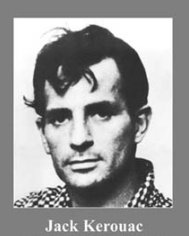
Jack Kerouac, 1922 - 1969


Original name Jean-Luis Lebris de Kerouac

*The beat generation.

*All of life is a foreign country.

*This is the story of America. Everybody's doing what they think they're supposed to do.

*The only people for me are the mad ones, the ones who are mad to live, mad to talk, mad to be saved, desirous of everything at the same time, the ones who never yawn or say a commonplace thing, but burn, burn, burn like fabulous yellow roman candles exploding like spiders across the stars...

Jack Kerouac, On The Road, 1957

*The only people for me are the mad ones, the ones who are mad to live, mad to talk, mad to be saved, desirous of everything at the same time, the ones who never yawn or say a commonplace thing, but burn, burn, burn, like fabulous yellow roman candles exploding like spiders across the stars and in the middle you see the blue centerlight pop and everybody goes "Awww!”

*I like too many things and get all confused and hung-up running from one falling star to another till I drop. This is the night, what it does to you. I had nothing to offer anybody except my own confusion.

* I hope it is true that a man can die and yet not only live in others but give them life, and not only life, but that great consciousness of life.

*My fault, my failure, is not in the passions I have, but in my lack of control of them.

*Maybe that's what life is...a wink of the eye and winking stars.

*Great things are not accomplished by those who yield to trends and fads and popular opinion.

*What is the feeling when you're driving away from people, and they recede on the plain till you see their specks dispersing? -it's the too huge world vaulting us, and it's good-bye. But we lean forward to the next crazy venture beneath the skies.

*All human beings are also dream beings. Dreaming ties all mankind together.

*Now you understand the Oriental passion for tea," said Japhy. "Remember that book I told you about the first sip is joy, the second is gladness, the third is serenity, the fourth is madness, the fifth is ecstasy.

*Boys and girls in America have such a sad time together; sophistication demands that they submit to sex immediately without proper preliminary talk. Not courting talk- real straight talk about souls, for life is holy and every moment is precious.
*What’s in store for me in the direction I don’t take?

*No man should go through life without once experiencing healthy, even bored solitude in the wilderness, finding himself depending solely on himself and thereby learning his true and hidden strength.
*Avoid the world, it's just a lot of dust and drag and means nothing in the end.

*Write in recollection and amazement for yourself.

*...colleges being nothing but grooming schools for the middleclass non-identity which usually finds its perfect expression on the outskirts of the campus in rows of well-to-do houses with lawns and television sets is each living room with everybody looking at the same thing and thinking the same thing at the same time while the Japhies of the world go prowling in the wilderness...

*Why did I allow myself to be bored ever in the past and to compensate for it got high or drunk or rages or all the tricks people have because they want anything but serene understanding of just what there is, which is after all so much.

*Our battered suitcases were piled on the sidewalk again; we had longer ways to go. But no matter, the road is life.

*Whither goest thou, America, in thy shiny car in the night?

*We were all delighted, we all realized we were leaving confusion and nonsense behind and performing our one and noble function of the time, move.

*...and everything is going to the beat - It's the beat generation, it be-at, it's the beat to keep, it's the beat of the heart, it's being beat and down in the world and like oldtime lowdown and like in ancient civilizations the slave boatmen rowing galleys to a beat and servants spinning pottery to a beat...

*Oh little Cody Pomeray if there had been some way to send a cry to you even when you were too little to know what utterances and cries are for in this dark sad earth, with your terrors in a world so malign and inhospitable, and all the insults from heaven ramming down to crowd your head with anger, pain, disgrace, worst of all the crapulous poverty in and out of every splintered door of days, if someone could have said to you then, and made you perceive, "Fear life, but don't die; you're alone, everybody's alone. Oh Cody Pomeray, you can't win, you can't lose, all is ephemeral, all is hurt.

*It is not my fault that certain so-called bohemian elements have found in my writings something to hang their peculiar beatnik theories on.
Jack Kerouac quote

*Dean took out other pictures. I realized these were all the snapshots which our children would look at someday with wonder, thinking their parents had lived smooth, well-ordered, estabilished-within-the-photo lives and got up in the morning to walk proudly on the sidewalks of life, never dreaming the raggedy madness and riot of our actual lives, our actual night, the hell of it, the senseless nightmare road. All of it inside endless and beginningless emptiness. Pitiful forms of ignorance.”

*I was going to be left alone on my butt at the other end of the continent. But why think about that when all the golden land's ahead of you and all kinds of unforseen events wait lurking to surprise you and make you glad you're alive to see?

° Beat Movement:

developed in the second half of the 1950's. It was launched by a group of poets and novelists who shared a set of attitudes-anti-establishment, anti-intellectual-opposed to the reigning political, moral and cultural values of the post-World War era and claiming self-expression and self-realization. "Beat" alludes to "beaten down" ( by the values of the time), to "beatitudes"
(reached in esoteric or Eastern religions, or drug-induced visionary experiences), or to the "beat" of jazz music. Main poets: Allen Ginsberg, Gregory Corso and Lawrence Ferlinghetti; main novelists: William Burroughs and Jack Kerouac.

30 January 2007

Emily Dickinson, 1830 - 1886


Time and Eternity

AMPLE make this bed.
Make this bed with awe;
In it wait till judgment break
Excellent and fair.

Be its mattress straight,
Be its pillow round;
Let no sunrise’ yellow noise
Interrupt this ground.

24 January 2007

Today in American Literature


It's the birthday of Edith Wharton, born Edith Newbold Jones in New York City (1862). Her first great novel was The House of Mirth (1905), about the frustrated love affair between Lawrence Selden and a young woman named Lily Bart. She went on to write many more novels about frustrated love, including Ethan Frome (1911) and The Age of Innocence (1920), which was the first novel written by a woman ever to win the Pulitzer Prize.

Edith Wharton said, "Life is always a tightrope or a feather bed. Give me the tightrope."

From The Writer's Almanac produced by Prairie Home Productions and presented by American Public Media.

04 January 2007

Questions regarding the exam & the diary

Olivia asked:

Several little questions: when we know what short story and poem we want to
present do we have to give you the titles before the exams or do we just
come with two copies of it? Then, for the diary I surely have lost some of
the poems and I also have some where I haven't written anything on, so I would
like to know if we absolutely need to have all of them with an analysis or a
comment!!


Alafaco answered:

About your questions: you can tell me which poem and short story you have chosen at the time of the exam. Regarding your diary, all I can say is that the more complete it is, and the more it includes your comments and viewpoints, the higher your chance of scoring a good mark. If you have lost a few poems, try to make up for it in clarity, neatness and a personal touch which demonstrate your interest and enthusiasm.

All the best in your studies
R.B.

21 December 2006

Roundtable


Second Year Roundtable: This roundtable was succinct, well delivered and to the point. 8/10


Happy Holidays!


Wishing you all a happy holiday and all the very best in 2007

Tennessee Williams, 1911 - 1983


Don't look forward to the day you stop suffering, because when it comes you'll know you're dead.

I didn't go to the moon, I went much further-for time is the longest distance between two places.

Hell is yourself and the only redemption is when a person puts himself aside to feel deeply for another person.

Luxury is the wolf at the door and its fangs are the vanities and conceits germinated by success. When an artist learns this, he knows where the danger is.

Security is a kind of death.

When so many are lonely as seem to be lonely, it would be inexcusably selfish to be lonely alone.

Turn that off! I won't be looked at in this merciless glare! A Streetcar Named Desire

Blanch: I don't want realism.
Mitch: Naw, I guess not.
Blanch: I'll tell you what I want. Magic! A Streetcar Named Desire

I have always depended on the kindness of strangers. A Streetcar Named Desire (1947)

What is the victory of a cat on a hot tin roof?-I wish I knew...Just staying on it, I guess, as long as she can.Cat on a Hot Tin Roof

Make voyages! - Attempt them! - there's nothing else... Camino Real

Brick: Well, they say nature hates a vacuum, Big Daddy.
Big Daddy: That's what they say, but sometimes I think that a vacuum is a hell of a lot better than some of the stuff that nature replaces it with. Cat on a Hot Tin Roof (1955)

Everyone says he's sincere, but everyone isn't sincere. If everyone was sincere who says he's sincere there wouldn't be half so many insincere ones in the world and there would be lots, lots, lots more really sincere ones!

We have to distrust each other. It's our only defence against betrayal.Camino Real

18 December 2006

The alafaco of the matter is


Last week was fine. Had a few interesting discussions during the class with my usually wakeful students. This is what keeps the teacher going, a few bright eyes gleaming with intelligence here and there in a sea of faces looking up to you for knowledge and wisdom, or perhaps at the clock above your head. Hard to know which.
Discussed a very challenging poem by William Carlos Williams called "To Waken An Old Lady". The poem is about old age; the pain and inglorious state of growing old and also the richness of experience and memory that is part of its package.

Attended the annual end of the year supper with my students and other colleagues from FACO (see the photos below). It is a rewarding experience to get together with the students in an informal relaxed setting and listen to them telling you about their hopes and dreams for the future. It makes an old teacher feel part of a continuity, and contributing to a chain of renewable energies. It is a good way to welcome the new year.

How to Land on your Feet in the American Literature Exam


1) Read the handout on Practical Criticism.

2) Choose one poem we have discussed during the course and prepare at least three questions about its content.

3) Choose a piece of prose ( short story, play or essay) we have discussed during the course and prepare at least three questions about its content.

4) Make sure your diary is up to date and bring it with you to the exam.

16 December 2006

Roundtables


First Year: A very good roundtable, with a fine analysis of the text and germane background information. 8/10


Second Year : I enjoyed this roundtable. It was well organized and was delivered with confidence based on a good grasp of the material. 8/10

13 December 2006

Garrison Keillor, born August 7 1942


May 30, 2006

There is no monument like a book

Memorial Day is a fading holiday, destined to go the way of the Glorious Fourth and Labor Day, which once had ceremonial functions and now are simply bonus Saturdays. It was a small-town institution and a matter of community pride to honor our dead. The citizenry hiked up to the cemetery on Monday morning behind the VFW honor guard and listened to a speech and sang "America the Beautiful" and stood for a rifle salute and "Taps," and then walked quietly home. It's easier to organize this sort of thing in a town of 2,000 than in a city of a million, so it has faded, a victim of urbanization. And also because the speeches were not so good. And because we are young restless people, not old weepy people.

Americans aren't good at memorials. In the wake of President Kennedy's death, his name was attached to many things, including Idlewild Airport in New York and Cape Canaveral in Florida, but naming things isn't the same as remembering. The memorial airport - Kennedy, LaGuardia, Reagan, George Bush, John Wayne, General Edward Logan, General Billy Mitchell - is an odd notion. Airports are beehives. You get your ticket, go through security, get coffee, go to the gate, wait, board, and at what point do you stop to consider the World War II heroism of Navy flyer Butch O'Hare?

Likewise, the memorial freeway. A freeway is a strip of pockmarked concrete on which the uglier aspects of human nature are played out every day. You would not want the name of anyone you care for put on such a place.

A memorial is where the memory of a person is made manifest, such as Emily Dickinson's quiet house and garden in Amherst, or the restored Lincoln neighborhood in Springfield, or Hyde Park. Or the Civil War battlefields, which are faithfully maintained and staffed with knowledgeable guides. A three-hour visit can transport you back to 1863. The National Bohemian Historic Sites of Greenwich Village and San Francisco are there to be seen, the ghosts of E.E. Cummings and Edna St. Vincent Millay and Allen Ginsberg and Jerry Garcia. William Faulkner's house in Oxford, Mississippi. The list goes on.

But why the enormous lump that is Grant's Tomb? And Mount Rushmore? After you've driven the length of South Dakota, four faces carved from rock is not the thrill it ought to be. Add Ronald Reagan's face to it, grinning and winking, and liven up the place. And when will we put a stop to the tradition of the Imperial Presidential Library/Showroom & Temple? Lincoln was one who was worthy of a temple, but his memorial is a cold gloomy cavern. We should take the roof off and let the sun stream in and the rains pour down. It would look better as a ruin.

Anyway, there is no need for a stone memorial to honor the man who wrote "of the people, by the people, for the people" and "With malice toward none; with charity for all; with firmness in the right, as God gives us to see the right, let us strive on to finish the work we are in; to bind up the nation's wounds; to care for him who shall have borne the battle, and for his widow, and his orphan - to do all which may achieve and cherish a just and lasting peace, among ourselves, and with all nations." He wrote those words himself, sitting at a small desk upstairs in the White House, back at a time when presidents did that. Lincoln lives in the beautiful one-volume Library of America edition of his writings.

No writer needs a memorial. The family of E.B. White decided after he died that the farm in Maine where he wrote his books should not be turned into a museum. If you want to find him, you simply read the essay, "The Death of a Pig," or "Charlotte's Web" or "Here Is New York."

In New York they are trying to figure out how to honor the men and women who went down in the twin towers. Well, the best memorial yet is a lovely book, "102 Minutes." You can visit it anywhere, and it means more than a wall of names, or a reflecting pool. Those people live on in the book, which is about large and small acts of heroism and kindness in the face of death, and you can't say that with stones or reflecting pools. You need words.

© 2006 by Garrison Keillor. All rights reserved. Distributed by Tribune Media Services, INC.

Woody Allen, 1935-


Everybody says that comedy is harder to do. That's become a truism by now, but it's wrong. Comedy is not harder.The hardest thing is to do good work, whatever it is.

Eighty percent of success is showing up.

Eternal nothingness is fine if you happen to be dressed for it.

When I was kidnapped, my parents snapped into action.They rented out my room.

His lack of education is more than compensated for by his keenly developed moral bankruptcy.

How is it possible to find meaning in a finite world, given my waist and shirt size?

I am at two with nature.

I don't want to achieve immortality through my work... I want to achieve it through not dying.

I tended to place my wife under a pedestal.

I took a speed reading course and read 'War and Peace' in twenty minutes. It involves Russia.

I was thrown out of college for cheating on the metaphysics exam; I looked into the soul of the boy sitting next to me.

I'm astounded by people who want to 'know' the universe when it's hard enough to find your way around Chinatown.

If it turns out that there is a God, I don't think that he's evil. But the worst that you can say about him is that basically he's an underachiever.

If only God would give me some clear sign! Like making a large deposit in my name in a Swiss bank.

Interestingly, according to modern astronomers, space is finite. This is a very comforting thought-- particularly for people who can never remember where they have left things.

Life is divided into the horrible and the miserable.

Life is full of misery, loneliness, and suffering - and it's all over much too soon.

Money is better than poverty, if only for financial reasons.

Most of the time I don't have much fun. The rest of the time I don't have any fun at all.

My education was dismal. I went to a series of schools for mentally disturbed teachers.

My one regret in life is that I am not someone else.

Organized crime in America takes in over forty billion dollars a year and spends very little on office supplies.

11 December 2006

American Literature Through Journalism


From now on Alafaco is going to bring you one article a week dealing with the subject of American language and literature in current issues of American journals and newspapers.

07 December 2006

First Year Alafaco Roundtable


Excellent work. This roundtable displayed first rate delivery and masterful control over the subject. It well deserves 8 out of 10.

Second Year Alafaco Roundtable


A very perceptive roundtable with a good understanding of the text and intelligent questions. I give this roundtable 8 out of 10.

Woody Allen, 1935 -

06 December 2006

Toni Morrison, 1931 -


• Tell us what it is to be a woman so that we may know what it is to be a man. What moves at the margin. What it is to have no home in this place. To be set adrift from the one you knew. What it is to live at the edge of towns that cannot bear your company. (Nobel Lecture, 1993)

• The ability of writers to imagine what is not the self, to familiarize the strange and mystify the familiar, is the test of their power.

• I really think the range of emotions and perceptions I have had access to as a black person and as a female person are greater than those of people who are neither.... So it seems to me that my world did not shrink because I was a black female writer. It just got bigger.

• When I write, I don't translate for white readers.... Dostoevski wrote for a Russian audience, but we're able to read him. If I'm specific, and I don't overexplain, then anyone can overhear me.

• When there is pain, there are no words. All pain is the same.

• If there is a book you really want to read but it hasn’t been written yet, then you must write it. (speech)

• What difference do it make if the thing you scared of is real or not? (from Song of Solomon)

• I think women dwell quite a bit on the duress under which they work, on how hard it is just to do it at all. We are traditionally rather proud of ourselves for having slipped creative work in there between the domestic chores and obligations. I'm not sure we deserve such big A-pluses for all that. (from Newsweek interview, 1981)

• If you're going to hold someone down you're going to have to hold on by the other end of the chain. You are confined by your own repression.

• I'm a Midwesterner, and everyone in Ohio is excited. I'm also a New Yorker, and a New Jerseyan, and an American, plus I'm an African-American, and a woman. I know it seems like I'm spreading like algae when I put it this way, but I'd like to think of the prize being distributed to these regions and nations and races. (Nobel Lecture, 1993)

• In Tar Baby, the classic concept of the individual with a solid, coherent identity is eschewed for a model of identity which sees the individual as a kaleidoscope of heterogeneous impulses and desires, constructed from multiple forms of interaction with the world as a play of difference that cannot be completely comprehended.
*Becoming an American is based on an attitude: an exclusion of me.

*Black literature is taught as sociology, as tolerance, not as a serious, rigorous art form.

*Everything I've ever done, in the writing world, has been to expand articulation, rather than to close it.

*I don't write -ist novels.

*I learned an enormous amount of self-esteem, even though the collapse of the relationship suggested the opposite. I just had to stand up.

*I would solve a lot of literary problems just thinking about a character in the subway, where you can't do anything anyway.

*I'm not entangled in shaping my work according to other people's views of how I should have done it.

*It makes me breathless to be told that this is difficult writing-that nobody in the schools is going to want to talk about all of these issues.

*Make a difference about something other than yourselves.

William Carlos Williams, 1883 - 1963


To Waken an Old Lady

Old age is
a flight of small
cheeping birds
skimming
bare trees
above a snow glaze.
Gaining and failing
they are buffeted
by a dark wind --
But what?
On harsh weedstalks
the flock has rested --
the snow
is covered with broken
seedhusks
and the wind tempered
with a shrill
piping of plenty.


To Waken An Old Lady waken=to rouse from inactivity; stir up or excite; arouse; awaken

Old age is
a flight of small flight=A group, especially of birds or aircraft, flying together, flock.
cheeping birds = A faint, shrill sound like that of a young bird; a chirp.
skimming = to pass or glide lightly over or near a surface
bare trees
above a snow glaze. glaze=A thin glassy coating of ice
Gaining and failing gaining=To become fast
they are buffeted buffet=batter
by a dark wind --
But what?
On harsh weedstalks stalk=A stem or similar structure that supports a plant part such as a flower, flower cluster, or leaf
the flock has rested --
the snow
is covered with broken
seedhusks husk=the dry external covering of certain fruits or seeds, esp. of an ear of corn
and the wind tempered temper=to soften or tone down
with a shrill shrill=Sharp or keen to the senses; harshly vivid
piping of plenty piping=characterized by the peaceful music of the pipe plenty=a full or abundant supply or amount

01 December 2006

Sherwood Anderson, 1876 - 1941


Hands

Upon the half decayed veranda of a small frame house that stood near the edge of a ravine near the town of Winesburg, Ohio, a fat little old man walked nervously up and down. Across a long field that had been seeded for clover but that had produced only a dense crop of yellow mustard weeds, he could see the public highway along which went a wagon filled with berry pickers returning from the fields. The berry pickers, youths and maidens, laughed and shouted boisterously. A boy clad in a blue shirt leaped from the wagon and attempted to drag after him one of the maidens, who screamed and protested shrilly. The feet of the boy in the road kicked up a cloud of dust that floated across the face of the departing sun. Over the long field came a thin girlish voice. "Oh, you Wing Biddlebaum, comb your hair, it's falling into your eyes," commanded the voice to the man, who was bald and whose nervous little hands fiddled about the bare white forehead as though arranging a mass of tangled locks.

Wing Biddlebaum, forever frightened and beset by a ghostly band of doubts, did not think of himself as in any way a part of the life of the town where he had lived for twenty years. Among all the people of Winesburg but one had come close to him. With George Willard, son of Tom Willard, the proprietor of the New Willard House, he had formed something like a friendship. George Willard was the reporter on the Winesburg Eagle and sometimes in the evenings he walked out along the highway to Wing Biddlebaum's house. Now as the old man walked up and down on the veranda, his hands moving nervously about, he was hoping that George Willard would come and spend the evening with him. After the wagon containing the berry pickers had passed, he went across the field through the tall mustard weeds and climbing a rail fence peered anxiously along the road to the town. For a moment he stood thus, rubbing his hands together and looking up and down the road, and then, fear overcoming him, ran back to walk again upon the porch on his own house.

In the presence of George Willard, Wing Biddlebaum, who for twenty years had been the town mystery, lost something of his timidity, and his shadowy personality, submerged in a sea of doubts, came forth to look at the world. With the young reporter at his side, he ventured in the light of day into Main Street or strode up and down on the rickety front porch of his own house, talking excitedly. The voice that had been low and trembling became shrill and loud. The bent figure straightened. With a kind of wriggle, like a fish returned to the brook by the fisherman, Biddlebaum the silent began to talk, striving to put into words the ideas that had been accumulated by his mind during long years of silence.

Wing Biddlebaum talked much with his hands. The slender expressive fingers, forever active, forever striving to conceal themselves in his pockets or behind his back, came forth and became the piston rods of his machinery of expression.

The story of Wing Biddlebaum is a story of hands. Their restless activity, like unto the beating of the wings of an imprisoned bird, had given him his name. Some obscure poet of the town had thought of it. The hands alarmed their owner. He wanted to keep them hidden away and looked with amazement at the quiet inexpressive hands of other men who worked beside him in the fields, or passed, driving sleepy teams on country roads.

When he talked to George Willard, Wing Biddlebaum closed his fists and beat with them upon a table or on the walls of his house. The action made him more comfortable. If the desire to talk came to him when the two were walking in the fields, he sought out a stump or the top board of a fence and with his hands pounding busily talked with renewed ease.

The story of Wing Biddlebaum's hands is worth a book in itself. Sympathetically set forth it would tap many strange, beautiful qualities in obscure men. It is a job for a poet. In Winesburg the hands had attracted attention merely because of their activity. With them Wing Biddlebaum had picked as high as a hundred and forty quarts of strawberries in a day. They became his distinguishing feature, the source of his fame. Also they made more grotesque an already grotesque and elusive individuality. Winesburg was proud of the hands of Wing Biddlebaum in the same spirit in which it was proud of Banker White's new stone house and Wesley Moyer's bay stallion, Tony Tip, that had won the two-fifteen trot at the fall races in Cleveland.

As for George Willard, he had many times wanted to ask about the hands. At times an almost overwhelming curiosity had taken hold of him. He felt that there must be a reason for their strange activity and their inclination to keep hidden away and only a growing respect for Wing Biddlebaum kept him from blurting out the questions that were often in his mind.

Once he had been on the point of asking. The two were walking in the fields on a summer afternoon and had stopped to sit upon a grassy bank. All afternoon Wing Biddlebaum had talked as one inspired. By a fence he had stopped and beating like a giant woodpecker upon the top board had shouted at George Willard, condemning his tendency to be too much influenced by the people about him, "You are destroying yourself," he cried. "You have the inclination to be alone and to dream and you are afraid of dreams. You want to be like others in town here. You hear them talk and you try to imitate them."

On the grassy bank Wing Biddlebaum had tried again to drive his point home. His voice became soft and reminiscent, and with a sigh of contentment he launched into a long rambling talk, speaking as one lost in a dream.

Out of the dream Wing Biddlebaum made a picture for George Willard. In the picture men lived again in a kind of pastoral golden age. Across a green open country came clean-limbed young men, some afoot, some mounted upon horses. In crowds the young men came to gather about the feet of an old man who sat beneath a tree in a tiny garden and who talked to them.

Wing Biddlebaum became wholly inspired. For once he forgot the hands. Slowly they stole forth and lay upon George Willard's shoulders. Something new and bold came into the voice that talked. "You must try to forget all you have learned," said the old man. "You must begin to dream. From this time on you must shut your ears to the roaring of the voices."

Pausing in his speech, Wing Biddlebaum looked long and earnestly at George Willard. His eyes glowed. Again he raised the hands to caress the boy and then a look of horror swept over his face.

With a convulsive movement of his body, Wing Biddlebaum sprang to his feet and thrust his hands deep into his trousers pockets. Tears came to his eyes. "I must be getting along home. I can talk no more with you," he said nervously.

Without looking back, the old man had hurried down the hillside and across a meadow, leaving George Willard perplexed and frightened upon the grassy slope. With a shiver of dread the boy arose and went along the road toward town. "I'll not ask him about his hands," he thought, touched by the memory of the terror he had seen in the man's eyes. "There's something wrong, but I don't want to know what it is. His hands have something to do with his fear of me and of everyone."

And George Willard was right. Let us look briefly into the story of the hands. Perhaps our talking of them will arouse the poet who will tell the hidden wonder story of the influence for which the hands were but fluttering pennants of promise.

In his youth Wing Biddlebaum had been a school teacher in a town in Pennsylvania. He was not then known as Wing Biddlebaum, but went by the less euphonic name of Adolph Myers. As Adolph Myers he was much loved by the boys of his school.

Adolph Myers was meant by nature to be a teacher of youth. He was one of those rare, little-understood men who rule by a power so gentle that it passes as a lovable weakness. In their feeling for the boys under their charge such men are not unlike the finer sort of women in their love of men.

And yet that is but crudely stated. It needs the poet there. With the boys of his school, Adolph Myers had walked in the evening or had sat talking until dusk upon the schoolhouse steps lost in a kind of dream. Here and there went his hands, caressing the shoulders of the boys, playing about the tousled heads. As he talked his voice became soft and musical. There was a caress in that also. In a way the voice and the hands, the stroking of the shoulders and the touching of the hair were a part of the schoolmaster's effort to carry a dream into the young minds. By the caress that was in his fingers he expressed himself. He was one of those men in whom the force that creates life is diffused, not centralized. Under the caress of his hands doubt and disbelief went out of the minds of the boys and they began also to dream.

And then the tragedy. A half-witted boy of the school became enamored of the young master. In his bed at night he imagined unspeakable things and in the morning went forth to tell his dreams as facts. Strange, hideous accusations fell from his loose-hung lips. Through the Pennsylvania town went a shiver. Hidden, shadowy doubts that had been in men's minds concerning Adolph Myers were galvanized into beliefs.

The tragedy did not linger. Trembling lads were jerked out of bed and questioned. "He put his arms about me," said one. "His fingers were always playing in my hair," said another.

One afternoon a man of the town, Henry Bradford, who kept a saloon, came to the schoolhouse door. Calling Adolph Myers into the school yard he began to beat him with his fists. As his hard knuckles beat down into the frightened face of the schoolmaster, his wrath became more and more terrible. Screaming with dismay, the children ran here and there like disturbed insects. "I'll teach you to put your hands on my boy, you beast," roared the saloon keeper, who, tired of beating the master, had begun to kick him about the yard.

Adolph Myers was driven from the Pennsylvania town in the night. With lanterns in their hands a dozen men came to the door of the house where he lived alone and commanded that he dress and come forth. It was raining and one of the men had a rope in his hands. They had intended to hang the schoolmaster, but something in his figure, so small, white, and pitiful, touched their hearts and they let him escape. As he ran away into the darkness they repented of their weakness and ran after him, swearing and throwing sticks and great balls of soft mud at the figure that screamed and ran faster and faster into the darkness.

For twenty years Adolph Myers had lived alone in Winesburg. He was but forty but looked sixty-five. The name of Biddlebaum he got from a box of goods seen at a freight station as he hurried through an eastern Ohio town. He had an aunt in Winesburg, a black-toothed old woman who raised chickens, and with her he lived until she died. He had been ill for a year after the experience in Pennsylvania, and after his recovery worked as a day laborer in the fields, going timidly about and striving to conceal his hands. Although he did not understand what had happened he felt that the hands must be to blame. Again and again the fathers of the boys had talked of the hands. "Keep your hands to yourself," the saloon keeper had roared, dancing, with fury in the schoolhouse yard.

Upon the veranda of his house by the ravine, Wing Biddlebaum continued to walk up and down until the sun had disappeared and the road beyond the field was lost in the grey shadows. Going into his house he cut slices of bread and spread honey upon them. When the rumble of the evening train that took away the express cars loaded with the day's harvest of berries had passed and restored the silence of the summer night, he went again to walk upon the veranda. In the darkness he could not see the hands and they became quiet. Although he still hungered for the presence of the boy, who was the medium through which he expressed his love of man, the hunger became again a part of his loneliness and his waiting. Lighting a lamp, Wing Biddlebaum washed the few dishes soiled by his simple meal and, setting up a folding cot by the screen door that led to the porch, prepared to undress for the night. A few stray white bread crumbs lay on the cleanly washed floor by the table; putting the lamp upon a low stool he began to pick up the crumbs, carrying them to his mouth one by one with unbelievable rapidity. In the dense blotch of light beneath the table, the kneeling figure looked like a priest engaged in some service of his church. The nervous expressive fingers, flashing in and out of the light, might well have been mistaken for the fingers of the devotee going swiftly through decade after decade of his rosary.

Round Table First Year, November 30


Very well coordinated and coincise. Next time however, try to enlist the participation of the whole class by presenting a few questions about the text. This seminar gets 8 out of 10.