Followers

23 November 2006

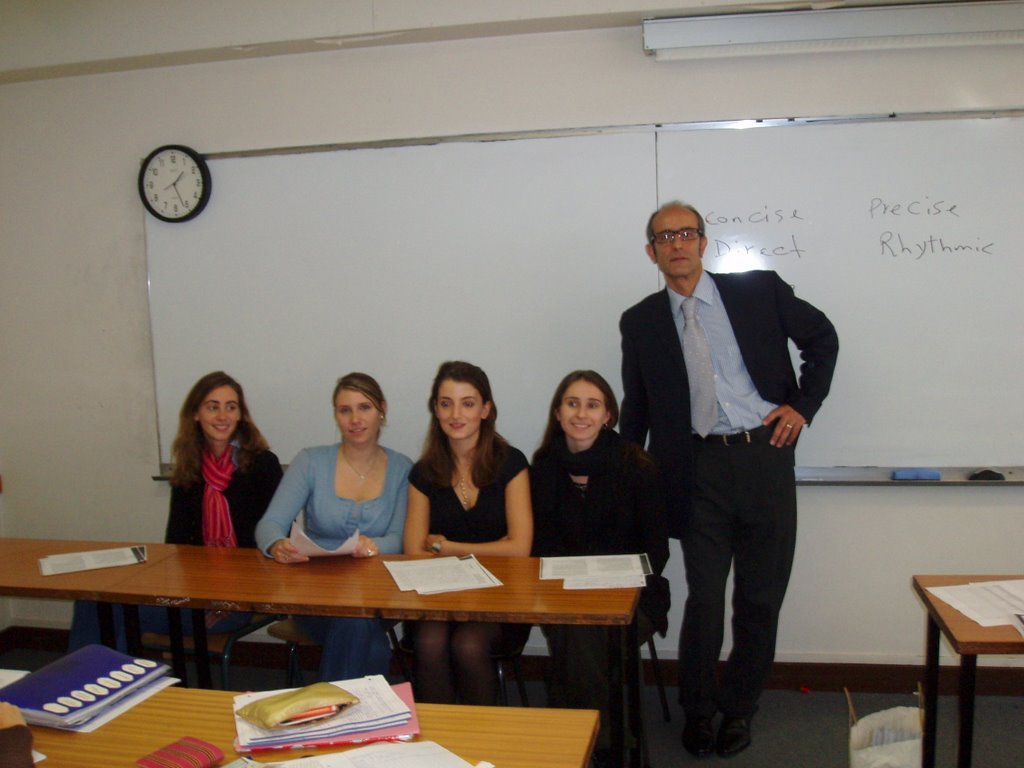
Alafaco First Year Round Table

Thank you very much. An excellent round table, comprehensive and well thought through. You deserve 8 out of 10.

Alafaco Second Year Round Table

This is what is called creative reading. Congratulations. You deserve 8 out of 10.

Paul Laurence Dunbar (1872-1906), Sympathy

I KNOW what the caged bird feels, alas!
When the sun is bright on the upland slopes;
When the wind stirs soft through the springing grass,
And the river flows like a stream of glass;
When the first bird sings and the first bud opes,
And the faint perfume from its chalice steals —
I know what the caged bird feels!

I know why the caged bird beats his wing
Till its blood is red on the cruel bars;
For he must fly back to his perch and cling
When he fain would be on the bough a-swing;
And a pain still throbs in the old, old scars
And they pulse again with a keener sting —
I know why he beats his wing!

I know why the caged bird sings, ah me,
When his wing is bruised and his bosom sore,—
When he beats his bars and he would be free;
It is not a carol of joy or glee,
But a prayer that he sends from his heart's deep core,
But a plea, that upward to Heaven he flings —
I know why the caged bird sings!

Life's Tragedy by Paul Laurence Dunbar

It may be misery not to sing at all,
And to go silent through the brimming day;
It may be misery never to be loved,
But deeper griefs than these beset the way.

To sing the perfect song,
And by a half-tone lost the key,
There the potent sorrow, there the grief,
The pale, sad staring of Life's Tragedy.

To have come near to the perfect love,
Not the hot passion of untempered youth,
But that which lies aside its vanity,
And gives, for thy trusting worship, truth.

This, this indeed is to be accursed,
For if we mortals love, or if we sing,
We count our joys not by what we have,
But by what kept us from that perfect thing.

22 November 2006

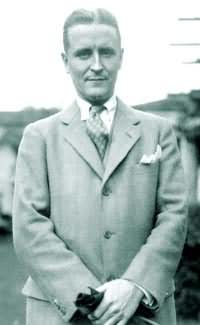
F. Scott Fitzgerald, 1896 - 1940


Either you think, or else others have to think for you and take power from you, pervert and discipline your natural tastes, civilize and sterilize you.

First you take a drink, then the drink takes a drink, then the drink takes you.

Genius is the ability to put into effect what is on your mind.

In a real dark night of the soul, it is always three o'clock in the morning, day after day.

It is in the thirties that we want friends. In the forties we know they won't save us any more than love did.

It takes a genius to whine appealingly.

Never confuse a single defeat with a final defeat.

No such thing as a man willing to be honest - that would be like a blind man willing to see.

Show me a hero and I'll write you a tragedy.

The rhythm of the weekend, with its birth, its planned gaieties, and its announced end, followed the rhythm of life and was a substitute for it.

The test of a first rate intelligence is the ability to hold two opposed ideas in the mind at the same time, and still retain the ability to function.

The victor belongs to the spoils.

The world, as a rule, does not live on beaches and in country clubs.

Vitality shows in not only the ability to persist but the ability to start over.

You don't write because you want to say something, you write because you have something to say.

All good writing is swimming under water and holding your breath.

That was always my experience-- a poor boy in a rich town; a poor boy in a rich boy's school; a poor boy in a rich man's club at Princeton ... . However, I have never been able to forgive the rich for being rich, and it has colored my entire life and works.

Paul Laurence Dunbar, 1872 - 1906

His poetry reflects Black American life and dialect.


Paul Laurence Dunbar was the first African-American to gain national eminence as a poet. Born in 1872 in Dayton, Ohio, he was the son of ex-slaves and classmate to Orville Wright of aviation fame.
Although he lived to be only 33 years old, Dunbar was prolific, writing short stories, novels, librettos, plays, songs and essays as well as the poetry for which he became well known. He was popular with black and white readers of his day, and his works are celebrated today by scholars and school children alike.
His style encompasses two distinct voices -- the standard English of the classical poet and the evocative dialect of the turn-of-the-century black community in America. He was gifted in poetry -- the way that Mark Twain was in prose -- in using dialect to convey character.

Information cited from:

http://www.plethoreum.org/dunbar/

21 November 2006

J(erome) D(avid) Salinger, 1919 - 2010

A Perfect Day for Bananafish

The New Yorker, January 31, 1948

To read this short story please go to the following link:

http://www.freeweb.hu/tchl/salinger/perfectday.html

17 November 2006

Alafaco Round Table Second Year

An excellent quality of research, coordination and presentation. This round table deserves a high score: eight out of ten.


Alafaco Round Table First Year


An Excellent round table. Observing many excellent rules of communication including eye contact with the audience, grasp of the material, fine delivery and first rate arguments. I give it eight out of ten.

16 November 2006

Alafaco's Thought of the Day


Thought


By D. H. Lawrence


Thought, I love thought.
But not the juggling and twisting of already existent ideas
I despise that self-important game.
Thought is the welling up of unknown life into consciousness,
Thought is the testing of statements on the touchstone of consciousness,
Thought is gazing onto the face of life, and reading what can be read,
Thought is pondering over experience, and coming to conclusion.
Thought is not a trick, or an exercise, or a set of dodges,
Thought is a man in his wholeness, wholly attending.

15 November 2006

I Hear America Singing


I hear America singing, the varied carols I hear;
Those of mechanics—each one singing his, as it should be, blithe and strong;
The carpenter singing his, as he measures his plank or beam,
The mason singing his, as he makes ready for work, or leaves off work;
The boatman singing what belongs to him in his boat—the deckhand singing on the steamboat deck;
The shoemaker singing as he sits on his bench—the hatter singing as he stands;
The wood-cutter’s song—the ploughboy’s, on his way in the morning, or at the noon intermission, or at sundown;
The delicious singing of the mother—or of the young wife at work—or of the girl sewing or washing—Each singing what belongs to her, and to none else;
The day what belongs to the day—At night, the party of young fellows, robust, friendly,
Singing, with open mouths, their strong melodious songs.

O Captain! My Captain! Walt Whitman. 1819–1892


O CAPTAIN! my Captain! our fearful trip is done,
The ship has weather'd every rack, the prize we sought is won,
The port is near, the bells I hear, the people all exulting,
While follow eyes the steady keel, the vessel grim and daring;
But O heart! heart! heart!
O the bleeding drops of red!
Where on the deck my Captain lies,
Fallen cold and dead.

O Captain! my Captain! rise up and hear the bells;
Rise up—for you the flag is flung—for you the bugle trills,
For you bouquets and ribbon'd wreaths—for you the shores crowding,
For you they call, the swaying mass, their eager faces turning;
Here, Captain! dear father!
This arm beneath your head!
It is some dream that on the deck
You've fallen cold and dead.

My Captain does not answer, his lips are pale and still,
My father does not feel my arm, he has no pulse nor will;
The ship is anchor'd safe and sound, its voyage closed and done,
From fearful trip the victor ship comes in with object won;
Exult, O shores! and ring, O bells!
But I, with mournful tread,
Walk the deck my Captain lies,
Fallen cold and dead.

Walt Whitman, 1819 - 1892


Recorders Ages Hence


Recorders ages hence!
Come, I will take you down underneath this impassive exterior—I will tell you what to say of me;
Publish my name and hang up my picture as that of the tenderest lover,
The friend, the lover’s portrait, of whom his friend, his lover, was fondest,
Who was not proud of his songs, but of the measureless ocean of love within him—and freely pour’d it forth,
Who often walk’d lonesome walks, thinking of his dear friends, his lovers,
Who pensive, away from one he lov’d, often lay sleepless and dissatisfied at night,
Who knew too well the sick, sick dread lest the one he lov’d might secretly be indifferent to him,
Whose happiest days were far away, through fields, in woods, on hills, he and another, wandering hand in hand, they twain, apart from other men,
Who oft as he saunter’d the streets, curv’d with his arm the shoulder of his friend—while the arm of his friend rested upon him also.

12 November 2006

F. Scott Fitzgerald, 1896 - 1940

Please read 'THE DIAMOND AS BIG AS THE RITZ' at the following link:


http://www.sc.edu/fitzgerald/diamond/diamond.html

11 November 2006

Alafaco Camera


A Rose for Emily by William Faulkner


I hope you are enjoying this short story.

Post Your Message


If you have any comments or suggestions post a message here. Have your say. You get extra marks for taking an interest.

Alafaco Round Table First Year

A very good effort. Needed better time management. Lack of preparation of questions for the class was also another problem. I give this round table seven out of ten for its thoroughness and also the smoothness of delivery.


Alafaco Round Table Second Year


A good Round Table but it could have been better if the participants had prepared a few questions for the class. I would give this round table six out of ten.

03 November 2006

Attention Second Year: For reading 'The Europeans 'go to the following link:


http://www.online-literature.com/henry_james/the_europeans/

Attention First Year: For reading 'The Scarlet Letter 'go to the following link:


http://www.online-literature.com/hawthorne/scarletletter/

Alafaco Round Table Second Year


A very good round table. Next time however try to prepare more questions for the class.

Alafaco Round Table First Year


It was a good seminar. Just a little advice: Try not to read from the text. Just occasionally look at your notes to keep your presentation organized.8/10

26 October 2006

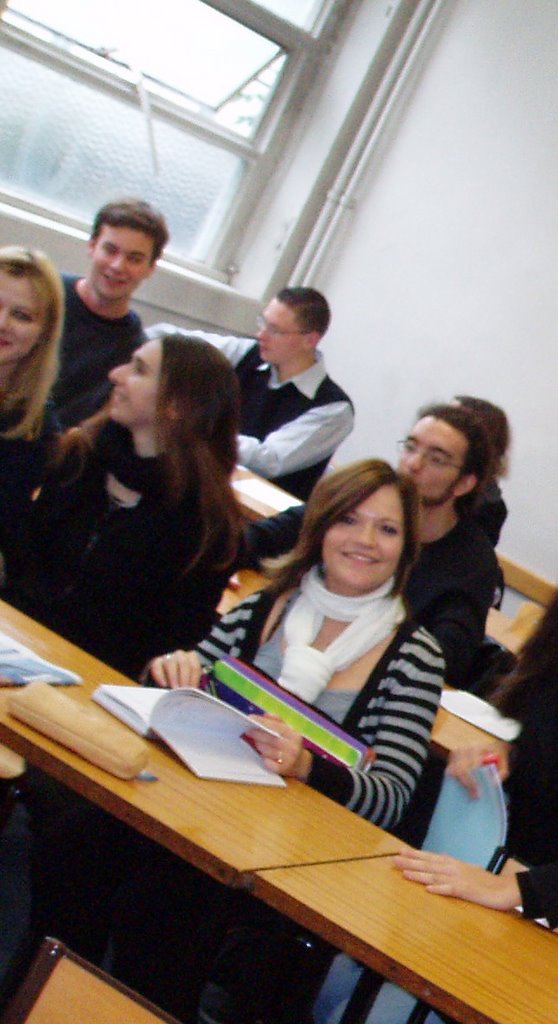
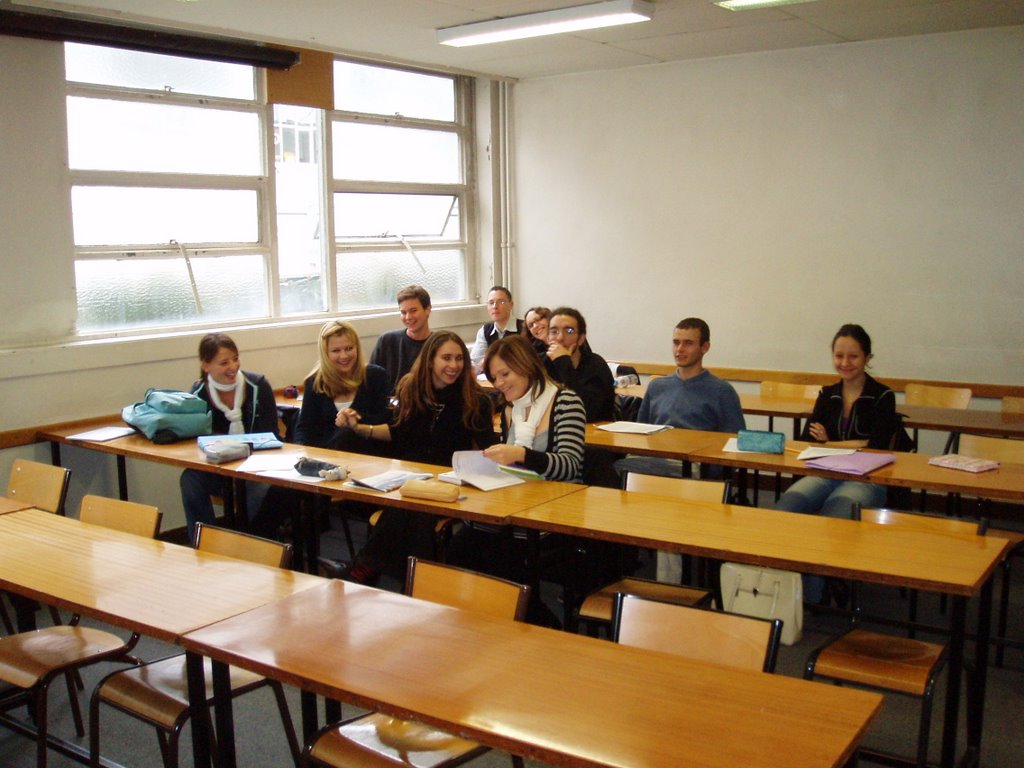
alafaco pictures


Next Week's Round Table Second Year


THE BEAR CAME OVER THE MOUNTAIN
by ALICE MUNRO

Please go to the following link:

http://www.newyorker.com/printables/archive/060605fr_archive01

Edna St. Vincent Millay, 1892 - 1950


Love Is Not All


Love is not all: it is not meat nor drink
Nor slumber nor a roof against the rain;
Nor yet a floating spar to men that sink
And rise and sink and rise and sink again;
Love can not fill the thickened lung with breath,
Nor clean the blood, nor set the fractured bone;
Yet many a man is making friends with death
Even as I speak, for lack of love alone.
It well may be that in a difficult hour,
Pinned down by pain and moaning for release,
Or nagged by want past resolution's power,
I might be driven to sell your love for peace,
Or trade the memory of this night for food.
It well may be. I do not think I would.

25 October 2006

A Noiseless Patient Spider, Walt Whitman (1819-1892)


A noiseless patient spider,
I mark'd where on a little promontory it stood isolated,
Mark'd how to explore the vacant vast surrounding,
It launch'd forth filament, filament, filament, out of itself,
Ever unreeling them, ever tirelessly speeding them.

And you O my soul where you stand,
Surrounded, detached, in measureless oceans of space,
Ceaselessly musing, venturing, throwing, seeking the spheres to connect them,
Till the bridge you will need be form'd, till the ductile anchor hold,
Till the gossamer thread you fling catch somewhere, O my soul.

24 October 2006

Henry James


I hope you are all enjoying "The Real Thing". Are you?

19 October 2006

First Year alafaco Round Table


The participants in this Round Table were the first group to test the waters. I have to give them credit for trying to put a plan of attack together without having any previous examples to follow. On a scale of one to ten I give them an eight. I acknowledge however that they were ill at ease, and instead of expressing their own impressions they relied on the views of literary analysts whose work they did not digest very well. I am looking forward to their next round table.

Other Second Year photos


Second Year alafaco Round Table


On a scale of one to ten, I would mark this Round Table as a 6. All the participants in this round table could produce much better work. So they did not really live up to their potential. They were not the vigorous challenging selves I know them to be.
I am looking forward to their next performance.

Hemingway's iceberg


I always try to write on the principle of the iceberg. There is seven-eighths of it underwater for every part that shows. Anything you know you can eliminate and it only strengthens your iceberg. It is the part that doesn't show. If a writer omits something because he does not know it then there is a hole in the story.

A man can be destroyed but not defeated.

All good books have one thing in common - they are truer than if they had really happened.

All modern American literature comes from one book by Mark Twain called Huckleberry Finn.

All our words from loose using have lost their edge.

Always do sober what you said you'd do drunk. That will teach you to keep your mouth shut.

An intelligent man is sometimes forced to be drunk to spend time with his fools.

But man is not made for defeat. A man can be destroyed but not defeated.

Courage is grace under pressure.

Cowardice, as distinguished from panic, is almost always simply a lack of ability to suspend the functioning of the imagination.

Cowardice... is almost always simply a lack of ability to suspend functioning of the imagination.

Every man's life ends the same way. It is only the details of how he lived and how he died that distinguish one man from another.

For a long time now I have tried simply to write the best I can. Sometimes I have good luck and write better than I can.

For a war to be just three conditions are necessary - public authority, just cause, right motive.

Forget your personal tragedy. We are all bitched from the start and you especially have to be hurt like hell before you can write seriously. But when you get the damned hurt, use it-don't cheat with it.

12 October 2006

Robert Frost (1874–1963)

The Road Not Taken


TWO roads diverged in a yellow wood,
And sorry I could not travel both
And be one traveler, long I stood
And looked down one as far as I could
To where it bent in the undergrowth;

Then took the other, as just as fair,
And having perhaps the better claim,
Because it was grassy and wanted wear;
Though as for that the passing there
Had worn them really about the same,

And both that morning equally lay
In leaves no step had trodden black.
Oh, I kept the first for another day!
Yet knowing how way leads on to way,
I doubted if I should ever come back.
I shall be telling this with a sigh
Somewhere ages and ages hence:
Two roads diverged in a wood, and I—
I took the one less traveled by,
And that has made all the difference.

Chief Seattle's LETTER TO ALL

Chief Seattle (more correctly known as Seathl) was a Susquamish chief who lived on the islands of the Puget Sound. As a young warrier, Chief Seattle was known for his courage, daring and leadership. He gained control of six of the local tribes and continued the friendly relations with the local whites that had been established by his father. His now famous speech was believed to have been given in December, 1854. There are several versions of his letter; the following was provided by Barefoot Bob.

Chief Seattle's Letter

"The President in Washington sends word that he wishes to buy our land. But how can you buy or sell the sky? the land? The idea is strange to us. If we do not own the freshness of the air and the sparkle of the water, how can you buy them?
Every part of the earth is sacred to my people. Every shining pine needle, every sandy shore, every mist in the dark woods, every meadow, every humming insect. All are holy in the memory and experience of my people.
We know the sap which courses through the trees as we know the blood that courses through our veins. We are part of the earth and it is part of us. The perfumed flowers are our sisters. The bear, the deer, the great eagle, these are our brothers. The rocky crests, the dew in the meadow, the body heat of the pony, and man all belong to the same family.
The shining water that moves in the streams and rivers is not just water, but the blood of our ancestors. If we sell you our land, you must remember that it is sacred. Each glossy reflection in the clear waters of the lakes tells of events and memories in the life of my people. The water's murmur is the voice of my father's father.
The rivers are our brothers. They quench our thirst. They carry our canoes and feed our children. So you must give the rivers the kindness that you would give any brother.
If we sell you our land, remember that the air is precious to us, that the air shares its spirit with all the life that it supports. The wind that gave our grandfather his first breath also received his last sigh. The wind also gives our children the spirit of life. So if we sell our land, you must keep it apart and sacred, as a place where man can go to taste the wind that is sweetened by the meadow flowers.
Will you teach your children what we have taught our children? That the earth is our mother? What befalls the earth befalls all the sons of the earth.
This we know: the earth does not belong to man, man belongs to the earth. All things are connected like the blood that unites us all. Man did not weave the web of life, he is merely a strand in it. Whatever he does to the web, he does to himself.
One thing we know: our God is also your God. The earth is precious to him and to harm the earth is to heap contempt on its creator.
Your destiny is a mystery to us. What will happen when the buffalo are all slaughtered? The wild horses tamed? What will happen when the secret corners of the forest are heavy with the scent of many men and the view of the ripe hills is blotted with talking wires? Where will the thicket be? Gone! Where will the eagle be? Gone! And what is to say goodbye to the swift pony and then hunt? The end of living and the beginning of survival.
When the last red man has vanished with this wilderness, and his memory is only the shadow of a cloud moving across the prairie, will these shores and forests still be here? Will there be any of the spirit of my people left?
We love this earth as a newborn loves its mother's heartbeat. So, if we sell you our land, love it as we have loved it. Care for it, as we have cared for it. Hold in your mind the memory of the land as it is when you receive it. Preserve the land for all children, and love it, as God loves us.
As we are part of the land, you too are part of the land. This earth is precious to us. It is also precious to you.
One thing we know - there is only one God. No man, be he Red man or White man, can be apart. We ARE all brothers after all."

Carl Sandburg (1878–1967). Cornhuskers

Chicago Poet


I SALUTED a nobody.
I saw him in a looking-glass.
He smiled—so did I.
He crumpled the skin on his forehead,
frowning—so did I.
Everything I did he did.
I said, “Hello, I know you.”
And I was a liar to say so.

Ah, this looking-glass man!
Liar, fool, dreamer, play-actor,
Soldier, dusty drinker of dust—
Ah! he will go with me
Down the dark stairway
When nobody else is looking,
When everybody else is gone.

He locks his elbow in mine,
I lose all—but not him.

04 October 2006

There's a certain slant of light

by Emily Dickinson, 1830 - 1886

There's a certain slant of light,
On winter afternoons,
That oppresses, like the weight
Of cathedral tunes.
Heavenly hurt it gives us;
We can find no scar,
But internal difference
Where the meanings are.

None may teach it anything,
'Tis the seal, despair,-
An imperial affliction
Sent us of the air.

When it comes, the landscape listens,
Shadows hold their breath;
When it goes, 't is like the distance
On the look of death.

The Organization of the Course

You can find alafaco at the following address:

http://alafaco.blogspot.com/


Words to Ponder:


“Information is endlessly available to us; where shall wisdom be found?”

Harold Bloom

“A blank page is actually a whitewashed wall with no door and no window. Beginning to tell a story is like making a pass at a total stranger in a restaurant. Remember Chekhov’s Gurov in “The Lady with the dog”? Gurov beckons to the little dog, wagging his finger at it over and over again, until the lady says, blushing, “ He doesn’t bite”, whereupon Gurov asks her permission to give the dog a bone. Both Gurov and Chekhov have now been given a thread to go by; the flirtation begins and story takes off.
The beginning of almost every story is actually a bone, something with which to court the dog, which may bring you closer to the lady.”

Amos Oz

Modus Operandi

Approach:

The emphasis of the course will not be on information, but on finding our critical individual voice for evaluating and understanding the American literary experience that spans over five centuries. Genuine American literature has been to a large extent a pioneer experience. It has been the expression of a necessity to arrive at a unique personal account vis à vis the surrounding universe. Emerson in his famous essay Self Reliance exhorts his readers to “judge for yourself” and Emily Dickinson promotes the individual “house” of human consciousness that is able “to support itself”. This attitude is at the core of the American experience. To thoroughly come to terms with this viewpoint, one needs at the end to stand on one’s own intellectual feet and judge for oneself.


Evaluation:

1) Diary: An ongoing record based on a short summary of authors and concepts discussed in the class plus one or two paragraphs of personal comments and criticism at the end of each entry. Neatness and legibility is important.

2) Round Table: Students will be responsible for working together on various topics. Round tables last between ten to fifteen minutes. A team of four students can work together on a topic and offer a joint presentation.

3) Short essays of around 200 words.

4) Regular attendance and active participation in the discussions.


A word of caution: Use of secondary material without providing the source will be considered plagiarism.


Recommended Texts:

1) An Outline of American Literature by Peter B. High, Longman, 1986
2) An Introduction to American Literature: time present and time past, Françoise Grellet, Hachette, 2000
3) La Littérature américaine par Dominique Lescanne, Langues Pour Tous, 2004
posted by Ala Faco at 12:54 PM | 0 comments


Practical Criticism

Practical Criticism is a close reading of a text and writing an evaluation of that text based on first hand evidence.

A Glimpse by: Walt Whitman, 1819 - 1892

A Glimpse, through an interstice caught,
Of a crowd of workmen and drivers in a bar-room, around the stove,
late of a winter night--And I unremark'd seated in a corner;
Of a youth who loves me, and whom I love, silently approaching, and
seating himself near, that he may hold me by the hand;
A long while, amid the noises of coming and going--of drinking and
oath and smutty jest,
There we two, content, happy in being together, speaking little,
perhaps not a word.

From "Leaves of Grass", 1900
List all poems from "Leaves of Grass"

03 October 2006

Welcome to Alafaco

I would like to welcome you all to this new academic year. Last year was wonderful thanks to the interest and enthusiasm many of you contributed to the American Literature course. I am hoping that the current year will be even better. The first poem on the blog this year is one of my very favourites:

from "Asphodel, That Greeny Flower"

William Carlos Williams 1883-1963

My heart rouses
thinking to bring you news
of something
that concerns you
and concerns many men. Look at
what passes for the new.
You will not find it there but in
despised poems.
It is difficult
to get the news from poems
yet men die miserably every day
for lack
of what is found there.
Hear me out
for I too am concerned
and every man
who wants to die at peace in his bed
besides.

23 May 2006

Cloud, Castle, Lake

“Cloud, Castle, Lake,” Nabokov gives us a tale of peculiar horror wrapped up in fairy-tale whimsy.

“Cloud, Castle, Lake” is a parable on the plight of the individual who is swallowed against his will into the maw of the all-powerful Group. Vasili Ivanovich, a mild bachelor living in Germany, wins a pleasure trip at a charity ball. He hopes the trip will bring him “some wonderful, tremulous happiness,” but gets his first intimation that all will not go well when, on the train, he is requested to put down his book and join the group. From then on the trip is a nightmare of enforced jollification that becomes progressively more sinister and even violent.

At the most remote point of their itinerary, Vasili Ivanovich glimpses a landscape of such perfection that he wants to lose himself in it forever.

It was a pure, blue lake, with an unusual expression of its water. In the middle, a large cloud was reflected in its entirety. On the other side, on a hill thickly covered with verdure (and the darker the verdure, the more poetic it is), towered, arising from dactyl to dactyl, an ancient black castle. Of course, there are plenty of such views in Central Europe, but just this one—in the inexpressible and unique harmoniousness of its three principal parts, in its smile, in some mysterious innocence it had, my love! my obedient one!— was something so unique, and so familiar, and so long-promised, and it so understood the beholder that Vasili Ivanovich even pressed his hand to his heart, as if to see whether his heart was there in order to give it away.
But of course Vasili Ivanovich is not allowed to linger within his ideal. The triumphant Group tears the dreamer from the dreamscape and forcibly reinserts him into the baneful social entity.
Nabokov continued to express his detestation of totalitarianism in every form throughout the Forties: his story “Conversation

04 May 2006

The Road Not Taken

Two roads diverged in a yellow wood,
And sorry I could not travel both
And be one traveler, long I stood
And looked down one as far as I could
To where it bent in the undergrowth; 5

Then took the other, as just as fair,
And having perhaps the better claim,
Because it was grassy and wanted wear;
Though as for that the passing there
Had worn them really about the same, 10

And both that morning equally lay
In leaves no step had trodden black.
Oh, I kept the first for another day!
Yet knowing how way leads on to way,
I doubted if I should ever come back. 15

I shall be telling this with a sigh
Somewhere ages and ages hence:
Two roads diverged in a wood, and I—
I took the one less traveled by,
And that has made all the difference.

Robert Frost, 1874 - 1963. Review

After Apple-Picking

My long two-pointed ladder's sticking through a tree
Toward heaven still,
And there's a barrel that I didn't fill
Beside it, and there may be two or three
Apples I didn't pick upon some bough. 5
But I am done with apple-picking now.
Essence of winter sleep is on the night,
The scent of apples: I am drowsing off.
I cannot rub the strangeness from my sight
I got from looking through a pane of glass 10
I skimmed this morning from the drinking trough
And held against the world of hoary grass.
It melted, and I let it fall and break.
But I was well
Upon my way to sleep before it fell, 15
And I could tell
What form my dreaming was about to take.
Magnified apples appear and disappear,
Stem end and blossom end,
And every fleck of russet showing clear. 20
My instep arch not only keeps the ache,
It keeps the pressure of a ladder-round.
I feel the ladder sway as the boughs bend.
And I keep hearing from the cellar bin
The rumbling sound 25
Of load on load of apples coming in.
For I have had too much
Of apple-picking: I am overtired
Of the great harvest I myself desired.
There were ten thousand thousand fruit to touch, 30
Cherish in hand, lift down, and not let fall.
For all
That struck the earth,
No matter if not bruised or spiked with stubble,
Went surely to the cider-apple heap 35
As of no worth.
One can see what will trouble
This sleep of mine, whatever sleep it is.
Were he not gone,
The woodchuck could say whether it's like his 40
Long sleep, as I describe its coming on,
Or just some human sleep.

Marianne Moore quotes

“The deepest feeling always shows itself in silence; not in silence, but restraint”

“Poetry is the art of creating imaginary gardens with real toads.”

“There never was a war that was not inward; I must fight till I have conquered in myself what causes war.”

“Impatience is the mark of independence, not of bondage”

“Beauty is everlasting And dust is for a time..

“Psychology which explains everything explains nothing, and we are still in doubt”


“Poetry is all nouns and verbs”

“Any writer overwhelmingly honest about pleasing himself is almost sure to please others.”

“If you will tell me why the fen appears impassable, I then will tell you why I think that I can cross it if I try”

“The passion for setting people right is in itself an afflictive disease.”

Marianne Moore, 1887 - 1972

Silence


My father used to say,
"Superior people never make long visits,
have to be shown Longfellow's grave
nor the glass flowers at Harvard.
Self reliant like the cat --
that takes its prey to privacy,
the mouse's limp tail hanging like a shoelace from its mouth --
they sometimes enjoy solitude,
and can be robbed of speech
by speech which has delighted them.
The deepest feeling always shows itself in silence;
not in silence, but restraint."
Nor was he insincere in saying, "`Make my house your inn'."
Inns are not residences.


Notes

1] "My father used to say: a remark in conversation; Miss A. M. Homans, Professor Emeritus of Hygiene, Wellesley College. `My father used to say, "superior people never make long visits, then people are not so glad when you've gone." When I am visiting, I like to go about by myself. I never had to be shown Longfellow's grave nor the glass flowers at Harvard.'" [Moore's note, p. 105]

3] Longfellow: Henry Wadsworth Longfellow, US poet (1807-82).

13] "`Make my house your inn': Edmund Burke to a stranger with whom he had fallen into conversation in a bookshop. Life of Burke: James Prior; `"Throw yourself into a coach," said he. "Come down and make my house your inn."'" [Moore's note, p. 105]

_____________________

What Are Years?

What is our innocence,
what is our guilt? All are
naked, none is safe. And whence
is courage: the unanswered question,
the resolute doubt, -
dumbly calling, deafly listening-that
in misfortune, even death,
encourage others
and in it's defeat, stirs

the soul to be strong? He
sees deep and is glad, who
accededs to mortality
and in his imprisonment rises
upon himself as
the sea in a chasm, struggling to be
free and unable to be,
in its surrendering
finds its continuing.

So he who strongly feels,
behaves. The very bird,
grown taller as he sings, steels
his form straight up. Though he is captive,
his mighty singing
says, satisfaction is a lowly
thing, how pure a thing is joy.
This is mortality,
this is eternity.

03 May 2006

Mystery Poem. Who Wrote the following?

Conscience


Conscience is instinct bred in the house,
Feeling and Thinking propagate the sin
By an unnatural breeding in and in.
I say, Turn it out doors,
Into the moors.
I love a life whose plot is simple,
And does not thicken with every pimple,
A soul so sound no sickly conscience binds it,
That makes the universe no worse than 't finds it.
I love an earnest soul,
Whose mighty joy and sorrow
Are not drowned in a bowl,
And brought to life to-morrow;
That lives one tragedy,
And not seventy;
A conscience worth keeping;
Laughing not weeping;
A conscience wise and steady,
And forever ready;
Not changing with events,
Dealing in compliments;
A conscience exercised about
Large things, where one may doubt.
I love a soul not all of wood,
Predestinated to be good,
But true to the backbone
Unto itself alone,
And false to none;
Born to its own affairs,
Its own joys and own cares;
By whom the work which God begun
Is finished, and not undone;
Taken up where he left off,
Whether to worship or to scoff;
If not good, why then evil,
If not good god, good devil.
Goodness! you hypocrite, come out of that,
Live your life, do your work, then take your hat.
I have no patience towards
Such conscientious cowards.
Give me simple laboring folk,
Who love their work,
Whose virtue is song
To cheer God along.

27 April 2006

E. E. Cummings quotes

American poet 1894-1962


“We do not believe in ourselves until someone reveals that deep inside us something is valuable, worth listening to, worthy of our trust, sacred to our touch. Once we believe in ourselves we can risk curiosity, wonder, spontaneous delight or any experience that reveals the human spirit.”


“To be nobody but yourself in a world that's doing its best to make you somebody else, is to fight the hardest battle you are ever going to fight. Never stop fighting.”

“It takes courage to grow up and become who you really are.”

“The earth laughs in flowers.”

“The most wasted of all days is one without laughter.”


“Love is the voice under all silences, the hope which has no opposite in fear; the strength so strong mere force is feebleness: the truth more first than sun, more last than star...”

“The world is mud-luscious and puddle-wonderful.”

“To be nobody but yourself in a world which is doing its best, night and day, to make you everybody else means to fight the hardest battle which any human being can fight; and never stop fighting.”

“Unless you love someone, nothing else makes any sense.”

America makes prodigious mistakes, America has colossal faults, but one thing cannot be denied: America is always on the move. She may be going to Hell, of course, but at least she isn't standing still.

At least the Pilgrim Fathers used to shoot Indians: the Pilgrim Children merely punch time clocks.

Be of love a little more careful than of anything.

Humanity I love you because when you're hard up you pawn your intelligence to buy a drink.

I imagine that yes is the only living thing.

I like my body when it is with your body. It is so quite new a thing. Muscles better and nerves more.

I thank you God for this most amazing day, for the leaping greenly spirits of trees, and for the blue dream of sky and for everything which is natural, which is infinite, which is yes.

I'd rather learn from one bird how to sing than to teach ten thousand stars how not to dance.

I'm living so far beyond my income that we may almost be said to be living apart.

It takes courage to grow up and become who you really are.

It takes three to make a child.

Knowledge is a polite word for dead but not buried imagination.

Private property began the instant somebody had a mind of his own.

The world is mud-luscious and puddle-wonderful.

To be nobody but yourself in a world which is doing its best, night and day, to make you everybody else means to fight the hardest battle which any human being can fight; and never stop fighting.

Unbeing dead isn't being alive.